Wind Lifts, Not Pushes: The 7 Counterintuitive Forces That Threaten Your DFW Roof in 2026
The Myth of Wind Pushing: Understanding Aerodynamics on Your Roof
Most folks in DFW, when they think about wind damage to their homes, picture the wind just shoving against the side of the house. They imagine it like a big hand pushing on the walls, or a strong gust trying to knock down a tree. And sure, there's some of that happening, especially with really violent storms like tornadoes. But for the day-to-day wind events we see here in North Texas – the strong thunderstorms, the gusts that rattle your windows – the real danger isn't from the wind pushing down or sideways. It's from the wind lifting up. It sounds counterintuitive, right? Wind is air moving, and air is light. How can it lift something as heavy as a roof? Well, it all comes down to some pretty fascinating principles of physics, specifically aerodynamics. Think about how an airplane flies. It doesn't have rockets pushing it up; it uses the movement of air over its specially shaped wings to generate lift. Your roof, especially the sloped parts, can act a lot like an airplane wing when the wind hits it just right. Here in DFW, we get our fair share of strong winds. We're talking about gusts that can easily reach 50, 60, even 70 miles per hour during a typical North Texas thunderstorm. When that kind of air speed hits your roof at an angle, it doesn't just push. It creates a powerful upward force that can be incredibly destructive. Understanding this difference – between pushing and lifting – is the first, and perhaps most important, step in protecting your home from wind damage. It’s not about brute force; it’s about pressure differences.Quick Answer: While strong winds can exert some pushing force, the primary cause of wind damage to DFW roofs is often wind uplift. This phenomenon, governed by aerodynamic principles like Bernoulli's, creates lower pressure above the roof than below it, effectively sucking the roof upwards and leading to component failure.
Bernoulli's Principle: How Faster Air Creates Lower Pressure and Lifts Your Roof
So, how exactly does this "lifting" happen? The key is a scientific principle named after Daniel Bernoulli, an 18th-century Swiss mathematician and physicist. Bernoulli's Principle states that for an inviscid flow, an increase in the speed of the fluid occurs simultaneously with a decrease in pressure or a decrease in the fluid's potential energy. In simpler terms for us roofers and homeowners: faster-moving air exerts less pressure than slower-moving air. Now, imagine wind hitting the slope of your roof. As the air flows over the curved surface, it has to travel a slightly longer distance than the air flowing underneath the eaves. To cover that extra distance in the same amount of time, the air on top of the roof speeds up. According to Bernoulli's Principle, this faster-moving air creates an area of lower pressure directly above your roof. Meanwhile, the air underneath your roof, especially in the attic space or on the underside of the overhangs, is moving much slower. This slower-moving air has higher pressure. What happens when you have high pressure below and low pressure above? You get lift. It's like the wind is trying to suck your roof right off its foundation. This upward force, or wind uplift, is incredibly powerful and is responsible for a huge amount of the damage we see after a strong wind event in DFW.The 7 Forces of Wind Damage: Beyond Simple Pushing
While Bernoulli's Principle explains the primary lifting force, it's not the only way wind can wreak havoc on your roof. A comprehensive understanding involves recognizing a spectrum of forces. We often talk about wind damage in terms of "uplift," but it's more nuanced than just one single force. Here are the key forces at play that Montesco Roofing looks for when assessing wind damage on DFW homes: 1. Direct Uplift (Bernoulli's Effect): As discussed, this is the primary force where faster air over the roof creates lower pressure, pulling the roof upwards. This is most pronounced on the windward slopes of the roof. 2. Suction (Negative Pressure): This occurs at the edges and corners of the roof, and especially at the eaves and rakes. Wind flowing around these sharp edges creates areas of intense low pressure, essentially "sucking" these weaker points upwards. This is often where damage begins. 3. Drag (Wind Pressure): This is the "pushing" force people typically imagine. Wind directly impacting the roof surface, especially on vertical elements like gable ends or chimney caps, can exert significant pressure. While less common as the primary cause of widespread roof failure than uplift, it can contribute to damage, especially in extreme events. 4. Vorticity and Turbulence: Wind doesn't always flow smoothly. It can become turbulent, creating swirling pockets of air (vortices). These vortices can exert localized, unpredictable forces that can lift, twist, or tear at roofing materials. Think of it as tiny, erratic tornadoes dancing on your roof. 5. Overhang Lift: Soffits and fascia boards, the trim pieces under your eaves, are particularly vulnerable. The wind can get underneath them, creating significant uplift pressure that can rip them away, exposing the underlying structure. 6. Object Impact: This isn't a direct wind force on the roof itself, but wind carries objects. Debris like tree branches, patio furniture, or even smaller, lighter objects can become projectiles. When these hit your roof at high speeds, they can cause punctures, cracks, or dislodge shingles, creating entry points for other wind forces to exploit. 7. Wind-Driven Rain/Hail Intrusion: While not a "force" in the same sense, wind dramatically amplifies the damage caused by rain and hail. Wind can drive water and ice into tiny gaps, under shingles, and through any compromised areas, exacerbating leaks and structural weakening.When assessing wind damage, don't just look for missing shingles. Check for granule loss on the shingles, curling or lifting edges, and damage to soffits, fascia, and gutters. These are often the first signs of wind uplift at work.
Identifying Vulnerable Roof Designs in DFW's Climate
Not all roofs are created equal when it comes to wind resistance, and the DFW climate presents unique challenges. Certain roof designs and features are inherently more susceptible to wind uplift than others. As a DFW roofing contractor with over 13 years of experience, I've seen firsthand which types of roofs tend to fare worst during our notorious storm seasons.Key Insight
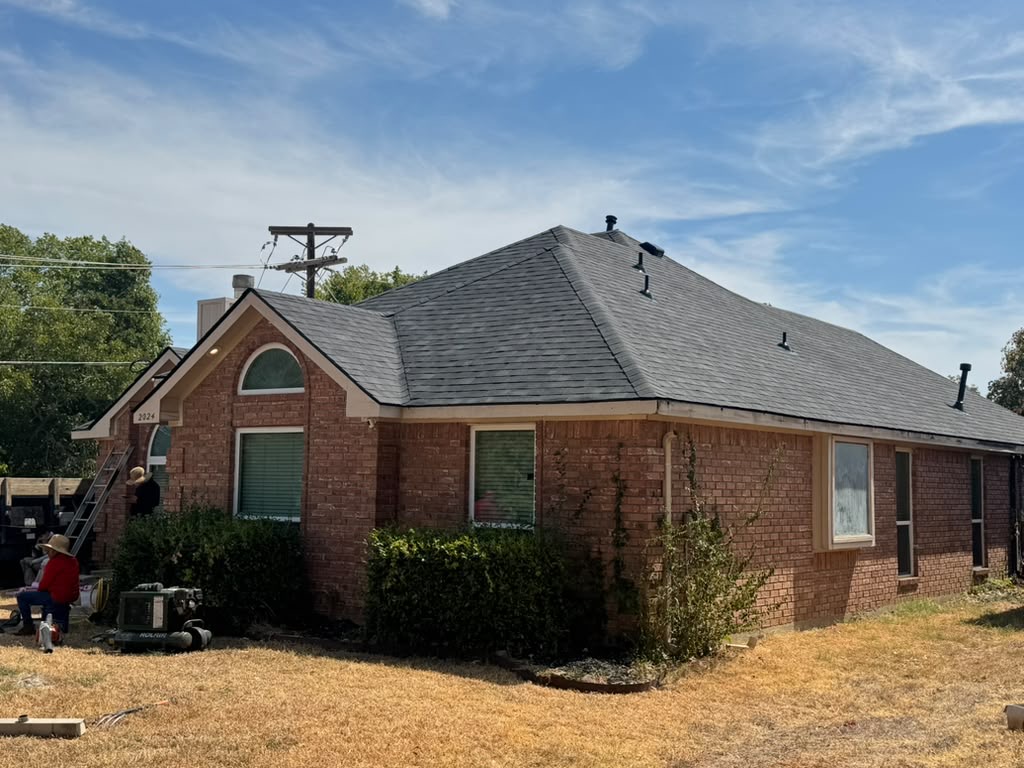
Steeper roof slopes, hip roofs, and complex rooflines with numerous valleys and dormers can be more prone to wind uplift than simpler, lower-slope designs. The way wind flows around these shapes creates more complex pressure zones.
Many older homes in DFW were built before modern wind-resistance standards were widely adopted. If your home has a roof installed more than 10-15 years ago, it might not be rated for the wind speeds common in North Texas storms today.
Critical Roof Components That Fail Under Wind Lift

1. Shingles
These are the most visible victims. Wind uplift can peel back shingles, tear them off completely, or cause their edges to curl and lift, compromising the seal. Even if a shingle isn't fully removed, a lifted edge allows wind-driven rain to get underneath.
2. Underlayment
Beneath the shingles is the underlayment (often synthetic or felt paper). If shingles are lifted or torn, the underlayment is exposed. While more resistant than shingles, sustained uplift or tears can pull the underlayment away from the deck, allowing water intrusion.
3. Roof Decking (Plywood/OSB)
This is the structural layer beneath the underlayment. While strong, the decking is typically fastened to the rafters with nails. If the uplift force is strong enough, it can pull the nails out of the decking or, in extreme cases, tear the decking itself, especially if it's old or has deteriorated.
4. Fasteners (Nails/Staples)
The nails holding your shingles, underlayment, and decking in place are critical. Wind uplift works by pulling up on the roofing materials, which then pulls on the fasteners. The sheer force can pull nails straight out of the wood or cause the wood to split around the nail head.
5. Fascia and Soffits
These are the trim boards along the edges of your roof. As mentioned, wind can get under soffits and create significant uplift, ripping them away. Fascia boards, which support gutters, can also be pulled away if the fasteners fail.
6. Ridge and Eave Vents
Proper roof ventilation is crucial, but vents, especially ridge vents, can be vulnerable. If the uplift force is strong enough, it can tear vent materials away, creating large openings for water and wind to enter.
"The weakest link in the chain is the one that fails first. In wind uplift, that weak link is often the nail holding the shingle down, or the seal strip that bonds the shingles together."— Dr. Ardeshir Faghri, Professor of Civil Engineering
Your 5-Step DFW Roof Wind-Damage Prevention Plan

Step 1: Regular Inspections
Don't wait for a storm. Schedule professional roof inspections at least twice a year, and after any significant wind event (sustained winds over 40-50 mph). Look for common signs of wear like curling shingles, granule loss in gutters, or loose flashing around chimneys and vents. A professional eye can spot potential problems before they become catastrophic failures.
Step 2: Ensure Proper Shingle Installation
This is paramount. Shingles need to be installed with the correct number of nails (typically 6 for high-wind areas) driven at the right depth and location. The self-sealing strips must bond properly. If your roof is due for replacement, always choose a reputable DFW roofing contractor who understands local building codes and manufacturer specifications for high-wind zones.
Step 3: Reinforce Vulnerable Areas
Focus on the edges of your roof. This includes eaves, rakes, and ridge caps. Ensure that your fascia boards and soffits are securely fastened. Consider using high-wind rated shingles and accessory products specifically designed for uplift resistance. These often have enhanced adhesive strips or stronger construction.
Step 4: Maintain Your Trees
Overhanging tree branches are a major source of wind-blown debris that can damage your roof. Trim branches that are close to your home, especially those that could fall onto the roof during a storm. Keeping your trees healthy and well-maintained reduces this risk significantly.
Step 5: Understand Your Insurance
Know your homeowner's insurance policy. Understand your deductible for wind damage and what your coverage entails. Document the condition of your roof before any major storms, perhaps with photos or videos. This will be invaluable if you need to file a claim after damage occurs. Many DFW homeowners are surprised to learn their policy might not cover the full cost of repair or replacement without specific endorsements.
How to Get This Done
DIY Inspection Tips: Safely observe your roof from the ground with binoculars. Check for missing shingles, curled edges, or granules in your gutters. Look at your soffits and fascia for any visible damage or sagging. Document any concerns with photos.
Professional Fortification: For a thorough assessment and to ensure your roof is truly fortified against DFW winds, trust an experienced DFW roofing contractor. We use specialized tools and knowledge to identify subtle weaknesses and implement solutions like enhanced nailing patterns, high-wind underlayment, and reinforced edge details. We also help navigate the complexities of insurance claims if damage has already occurred.
How Montesco Roofing Fortifies DFW Homes Against Wind Uplift
Here at Montesco Roofing, we've been protecting DFW homes from the elements for over 13 years. We understand that wind damage isn't just about aesthetics; it's about structural integrity and keeping your family safe. When we talk about fortifying a roof against wind uplift, we're talking about a systematic approach that goes beyond just slapping on new shingles. We start with a comprehensive inspection. This isn't a quick glance from the street. We get on the roof (safely, of course) and meticulously examine every aspect: the condition of the shingles, the integrity of the underlayment, the security of the flashing, the condition of the decking, and the fastening of the eaves and ridge. We're looking for those subtle signs that indicate the wind has already started to exert its force, even if you haven't noticed a leak yet. When it comes to installation or replacement, we adhere to strict standards that exceed minimum building codes, especially for high-wind resistance. This includes: * Enhanced Nailing Patterns: For asphalt shingles, we typically use 6 nails per shingle in high-wind zones, strategically placed to maximize holding power. We ensure nails are driven to the correct depth, not over-driven or under-driven, which can compromise their grip. * High-Wind Rated Materials: We exclusively use shingles and roofing systems that are rated for high winds. Many modern shingles have advanced adhesive strips that create a stronger bond with each layer, making them far more resistant to peeling back. We also recommend and install synthetic underlayments, which offer superior tear resistance compared to traditional felt. * Proper Ventilation: While vents can be vulnerable, we install them correctly and often use products designed to withstand wind forces better. Proper attic ventilation is crucial for roof longevity, but it must be integrated carefully. * Secure Edge Details: The eaves, rakes, and ridge are critical points where wind uplift is strongest. We ensure these areas are meticulously sealed and fastened, often using starter strips and metal drip edges designed for enhanced wind resistance. * Decking Assessment and Repair: If we find any soft spots or damaged decking during our inspection, we don't just cover them up. We repair or replace them to provide a solid, stable foundation for the new roofing system.| Feature | Standard Installation | Montesco High-Wind Installation |
|---|---|---|
| Nails per Shingle | 4 Nails/Shingle | 6 Nails/Shingle |
| Wind Resistance | Meets minimum code, but can be vulnerable in high winds. | Enhanced protection, specifically for DFW's wind conditions. Includes upgraded underlayment and edge treatments. |
FAQ: Wind Damage & Your DFW Roof

Frequently Asked Questions
Is wind uplift really a bigger threat than wind pushing on my roof?
How can I tell if my roof has wind damage?
What kind of shingles are best for wind resistance in Texas?
How many nails should be used per shingle for wind resistance?
What is the role of my roof's ventilation in wind damage?
How does wind-driven rain affect my roof?
What should I do if I suspect my roof has wind damage?
Need help putting this into action? Our team has protected hundreds of DFW homes from wind, hail, and everything North Texas throws at us. Tell us about your roof — free inspection, no pressure.
Get Your Free Roof Inspection →Montesco Roofing Team
DFW's trusted roofing contractor with 13+ years of experience. Specializing in roof replacements, storm damage repair, and insurance claims across Dallas-Fort Worth.
Get in touch →