One Bad Weekend After a Single Storm
The Unseen Enemy: How One Weekend Storm Can Wreck Your DFW Roof
You know that feeling. The sky turns an ominous shade of gray, the wind picks up with a vengeance, and you hear that familiar rattle of hail against your windows. For us here in the Dallas-Fort Worth Metroplex, it’s not a matter of if we’ll face a severe storm, but when. And while we might brace ourselves for a bit of yard cleanup, what most homeowners don't realize is that a single, intense weekend storm can inflict silent, devastating damage to their roof – damage that, if left unchecked, can easily cost upwards of $15,000 to repair or replace. That's not just a nuisance; it's a serious financial hit to your biggest investment: your home. We've seen it time and again, especially after the spring and fall storm seasons we experience here in North Texas. What looks like minor cosmetic damage on the surface can quickly lead to leaks, structural issues, and a cascade of problems that erode your home’s integrity and your peace of mind. It’s about protecting the sanctuary you’ve built, and understanding the true threat that these weather events pose.
Here in DFW, we’re no strangers to the dramatic shifts in weather. One minute it’s a calm, sunny day, the next, we’re under siege from a derecho or a severe thunderstorm packing damaging hail and winds. These aren't just inconvenient weather events; they are direct assaults on the integrity of your home's first line of defense: your roof. Think about it: your roof is constantly exposed to the elements. When a storm hits, it’s bearing the brunt of it all. Hailstones, some the size of golf balls or even larger, can impact shingles with incredible force. They don’t just dent them; they can crack them, loosen granules, and create micro-fractures that compromise the waterproofing layer. Even if you don’t see a hole, that shingle is now weakened and vulnerable. Then there are the winds. Strong gusts can lift shingles, tear them away completely, or drive debris into your roofing system. The aftermath might look like a few missing shingles, but the underlying damage can be far more extensive, affecting flashing, vents, and even the decking beneath. It's this unseen damage that creeps up on homeowners, turning a minor inconvenience into a major, expensive problem down the line. We've seen homes in Plano and Frisco suffer significant interior water damage simply because a few shingles were compromised by wind and rain, leading to slow, insidious leaks into the attic and ceilings.
After any significant storm, especially those with large hail or high winds, take a moment to look at your roof from the street. Are there any shingles that look like they’ve been lifted, torn, or are missing? Are there large piles of granules in your gutters? These are early visual cues that warrant a closer inspection.
The reality is, modern asphalt shingles, while resilient, have a lifespan and a breaking point. A single severe weather event can significantly shorten that lifespan, even if the damage isn't immediately apparent. The granules that protect your shingles from UV rays and provide fire resistance can be knocked loose by hail. While a few lost granules might seem insignificant, widespread granule loss exposes the asphalt layer beneath to the sun, causing it to degrade faster. This degradation weakens the shingle, making it more susceptible to cracking and curling over time. Wind can cause shingles to lift and flap, which can stress the nails holding them down, creating small entry points for water. It’s a domino effect. What starts as a small imperfection can turn into a major structural issue if not addressed. We often see homeowners in Arlington and Fort Worth whose roofs are only 5-7 years old, but due to a series of severe storms, they’re facing premature failure. This is precisely why understanding the immediate and long-term impacts of storm damage is so critical for DFW homeowners in 2026.
Beyond the Puddles: Identifying Subtle Storm Damage Signs That Cost Thousands
It’s easy to spot a disaster when your roof is gaping open or water is pouring into your living room. But the most insidious storm damage is often the kind you can't see right away. This is where the real cost lies, because by the time you notice the water stains on your ceiling or the mold creeping up your walls, the damage has likely spread and is much more expensive to fix. We’re talking about issues that start small and grow into significant problems over weeks or months. For homeowners in North Texas, understanding these subtle signs is your first line of defense against massive repair bills. It’s about knowing what to look for beyond the obvious.
Don't wait for visible leaks! By the time you see water stains inside your home, the roof decking may already be saturated, and mold growth could be starting in your attic or wall cavities. This significantly increases repair costs.
One of the most common subtle signs is granule loss. When hail strikes shingles, it knocks off the protective mineral granules. These granules often end up in your gutters and downspouts, or you might see them pooling at the base of your home. While a small amount of granule loss is normal over time, a significant amount following a storm is a clear indicator of impact damage. This loss exposes the asphalt layer of the shingle to UV rays, accelerating its degradation and making the shingle brittle and prone to cracking. Another tell-tale sign is bruised shingles. Hail can create a bruise-like effect on the shingle mat without necessarily breaking the surface. This damage weakens the shingle from the inside out, making it more susceptible to leaks and wind damage later. You might not see a crack, but the integrity of the shingle has been compromised. This is something a trained eye can spot during a professional inspection.
Step 1: Inspect Gutters and Downspouts
Look for an unusual amount of asphalt granules in your gutters. This is a direct sign that your shingles are losing their protective coating.
Step 2: Examine Shingles for Bruising or Cracking
From a safe vantage point (or with binoculars), look for dull spots, indentations, or cracks on the surface of your shingles. These are often signs of hail impact.
Step 3: Check Roof Valleys and Flashing
These areas are critical for water runoff. Wind can lift shingles here, and compromised flashing around chimneys, vents, and skylights is a common entry point for water.
Step 4: Look for Damaged or Missing Shingles
While obvious, even a few missing shingles can allow water to seep underneath and cause damage to the roof deck and structure.
Wind damage can be equally deceptive. High winds can lift the edges of shingles, even if they don't tear them off completely. This lifting can break the seals that hold shingles together, creating pathways for water to enter. You might also notice lifted or curled shingles, especially on the edges and ridges of your roof. These are signs that the wind has stressed the roofing material. Furthermore, wind can drive rain sideways, forcing it under shingles that might otherwise be considered intact. This is why even a storm without hail can cause significant water intrusion. We’ve had calls from homeowners in Garland and Mesquite after what seemed like a mild wind event, only to discover extensive water damage in their attics because the wind had compromised the seals on their shingles.
Key Insight
The true cost of storm damage isn't just the immediate repair. It's the potential for accelerated aging of your entire roofing system, increased energy bills due to compromised insulation (often from attic moisture), and the eventual need for a full roof replacement years before you expected it. These cascading issues can easily push the total cost well over $15,000.
The $15,000 Wake-Up Call: Understanding the True Cost of Neglected Storm Damage
Let’s talk numbers. Because when a storm hits your DFW home, it’s not just about a few shingles. It’s about protecting a significant financial asset. If you ignore those subtle signs of storm damage, or if your insurance company tries to offer a settlement that doesn't cover the full extent of the damage, you could be looking at a bill well exceeding $15,000. That’s a wake-up call most homeowners aren’t prepared for, especially in 2026 with rising material and labor costs. This figure isn't pulled out of thin air; it’s based on the cumulative cost of addressing multiple issues that stem from a single storm event.
Minor Repair (DIY/Patch Job)
Addresses immediate, visible issues only. Doesn't account for unseen damage or long-term effects. Often voids manufacturer warranties.
Professional Repair (Targeted)
Fixes identified damage but may miss underlying issues. Good for small, isolated incidents. Still might not cover full scope of a severe storm.
Full Roof Replacement (Storm Damage)
Addresses all compromised materials, underlayment, decking, and ensures proper ventilation and installation. The standard for significant storm damage.
So, how does it add up to $15,000 or more? It’s a combination of factors:
- Roof Deck Damage: Hail and wind can compromise the plywood or OSB sheathing beneath your shingles. Water intrusion can cause this decking to rot, leading to soft spots and sagging. Replacing damaged decking can add $2,000 - $6,000+ to a job, depending on the extent.
- Underlayment Compromise: The synthetic or felt underlayment is your second layer of defense. If it’s torn or punctured by hail, water can seep through, even if the shingles are intact. Replacing this is part of a full roof system.
- Flashing and Vent Damage: Metal flashing around chimneys, vents, and skylights can be bent or torn by wind and hail. Damaged flashing is a prime culprit for leaks. Replacing these components adds to the cost.
- Ventilation Issues: Storms can damage soffit vents, ridge vents, and attic fans. Proper attic ventilation is crucial for roof longevity and preventing moisture buildup. Repairing or upgrading ventilation can cost $500 - $2,000.
- Interior Water Damage: This is where costs can skyrocket. Water seeping through a compromised roof can damage drywall, insulation, paint, and even electrical wiring. Repairing water damage inside your home can easily run into the thousands of dollars, and that's before addressing the mold remediation that might be necessary.
- Mold Remediation: If moisture sits for too long, mold can grow. Removing mold is a specialized and often expensive process, adding $1,000 - $5,000+ to your total repair bill.
- Code Upgrades: In many DFW areas, when you replace a roof, local building codes require certain upgrades, such as ice and water shield in valleys and along eaves, or the installation of impact-resistant shingles if not already present. These add to the overall project cost but are essential for long-term protection.
The insidious nature of storm damage means that a seemingly minor event can set in motion a chain reaction of failures. A homeowner in Southlake might think a few dents on their shingles are no big deal. But over the next year, those dents lead to granule loss, then to accelerated shingle aging. When the next storm rolls through, those weakened shingles are far more likely to tear off or allow water to penetrate. By the time they notice the problem, the roof deck might be soft, the underlayment compromised, and interior damage has begun. The cost to fix all of this? Easily $15,000 or more, often exceeding what a full roof replacement would have cost initially, but done under emergency conditions with additional interior repairs. That’s why acting fast and getting a thorough inspection after a storm isn't just good advice; it's a financial imperative.
How to Get This Done
If you're dealing with storm damage, the first step is always a professional inspection. Montesco Roofing offers free, no-obligation storm damage inspections for DFW homeowners. We'll document all damage, provide a detailed estimate, and help you understand your options. For DIY inspection tips, focus on ground-level checks for debris in gutters and visible shingle damage from the street. Always prioritize safety and avoid climbing on a wet or damaged roof.
Hail vs. Wind: Differentiating Damage and Their Unique Repair Needs
When a storm rolls through DFW, it often brings a combination of damaging forces – hail and wind. While both can wreak havoc on your roof, they cause distinct types of damage that require different approaches to repair. Understanding these differences is key for homeowners to effectively communicate with their insurance adjusters and ensure their roof is repaired correctly. It’s not just about replacing what’s missing; it’s about restoring the entire roofing system to its pre-storm condition and ensuring its long-term performance. Here in North Texas, we see both, and sometimes, in the same storm!
Key Insight
Hail damage is often widespread and can affect shingles, vents, and even gutters, while wind damage typically targets specific areas like edges, ridges, and valleys where uplift forces are strongest. Recognizing these distinct patterns helps in diagnosing the full extent of the damage.
Hail Damage: The Silent Attacker
Hail, especially the large stones common in Texas storms, impacts your roof with significant force. The primary damage from hail is often:
- Bruising and Cracking: Hailstones can dent shingles, creating a "bruise" that weakens the matting beneath the asphalt. This damage isn't always visible as a hole but compromises the shingle's integrity, making it prone to future failure. It can also crack the shingle surface.
- Granule Loss: The force of hail can strip away the protective mineral granules from the shingle surface. This exposes the asphalt to UV rays, accelerating wear and tear and reducing the shingle's lifespan. A significant loss of granules across a large area is a strong indicator of hail damage.
- Impact on Other Components: Hail can also dent metal flashing, gutters, and HVAC units on the roof, which might not directly cause leaks but can lead to premature wear or aesthetic issues.
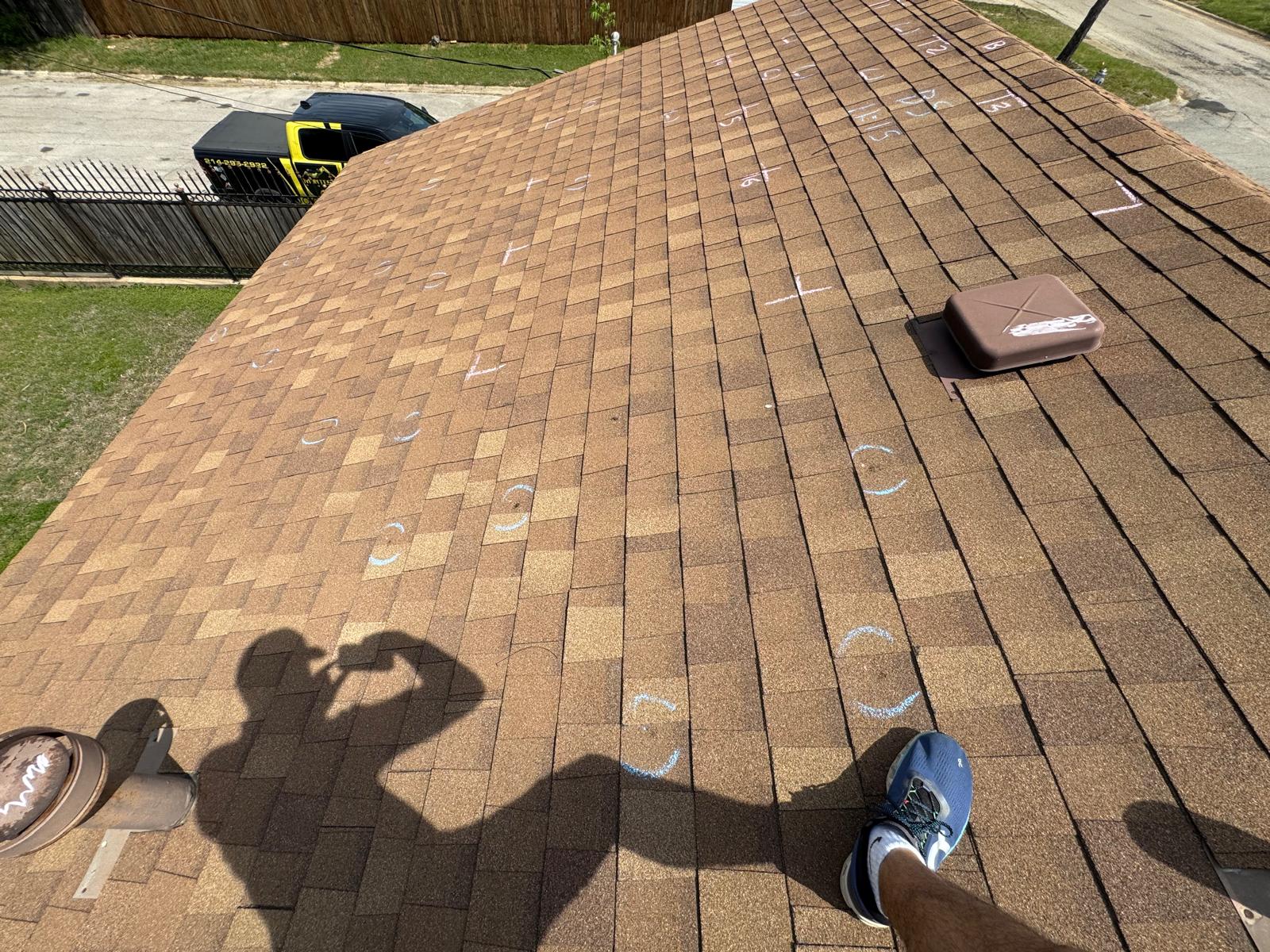
Hail damage is often spread across the entire roof surface, making it crucial to inspect the whole system, not just isolated spots. A professional inspection will look for these subtle signs of impact, often documented with close-up photos and chalk markings.
Wind Damage: The Uplifting Force
Wind damage is characterized by the force of uplift and lateral movement. High winds can:
- Lift and Tear Shingles: Wind gets underneath shingles, especially along edges and ridges, and can lift them, breaking the seals that bond them together. In severe cases, it can tear shingles completely off the roof.
- Compromise Flashing and Seals: The seals around vents, chimneys, and valleys are particularly vulnerable to wind. If these seals are broken, water can easily penetrate.
- Cause "Wind Rake" Damage: This refers to damage that occurs along the edges of the roof, where wind forces are often strongest. You might see shingles lifted, cracked, or missing along these perimeters.
- Damage Soffits and Fascia: Wind can also damage the exposed parts of your roof structure, like soffits (underneath the eaves) and fascia boards (the vertical boards at the roofline).
Wind damage is often more localized than hail damage, but the effects can be just as severe, leading to immediate leaks if shingles are torn off or seals are broken.
When documenting damage for insurance, be specific. Note whether you see widespread granule loss and bruising (suggesting hail) or lifted/torn shingles and compromised edges (suggesting wind). This detail helps the adjuster understand the forces your roof endured and ensures all types of damage are considered.
Why Differentiation Matters for Repairs
The distinction between hail and wind damage is critical for proper repair and insurance claims. Insurance adjusters are trained to identify both. If a roof has suffered hail damage, often the policy dictates that the entire roof needs to be replaced to ensure a consistent appearance and performance, even if only a portion shows significant damage. This is because it's nearly impossible to perfectly match the color and texture of aged shingles, and spot repairs can create a patchwork look. For wind damage, repairs might be more localized, but if the damage is widespread or affects key components like ridge caps, a full replacement might still be warranted.
Some roofing contractors, especially "storm chasers," might focus solely on hail damage and overlook wind damage, or vice versa. A reputable DFW roofing contractor will conduct a comprehensive inspection to identify all types of storm-related damage, ensuring your claim and subsequent repairs are complete and accurate.
At Montesco Roofing, we’ve seen countless storms sweep through DFW, from Frisco to Fort Worth, and we understand the unique ways each type of damage manifests. Our inspectors are trained to identify the subtle signatures of both hail and wind, ensuring that your roof is assessed comprehensively. This detailed approach helps homeowners navigate the insurance process more effectively and guarantees that the repairs or replacement address the full scope of the damage, protecting your home for years to come.
Your Insurance Lifeline: Navigating DFW Storm Damage Claims in 2026
Dealing with storm damage to your roof is stressful enough. Add to that the complexities of navigating your homeowners insurance claim, and it can feel overwhelming. Here in DFW, we've seen a significant increase in storm activity, and with it, more homeowners needing to file claims. In 2026, understanding the process, your policy, and how to work with your insurance company is more important than ever. Your insurance policy is designed to be your lifeline, but it requires a proactive and informed approach to ensure you get the coverage you're entitled to.
Understanding Your Policy: Deductibles and Coverage
The first step is to know your policy. Most homeowners insurance policies in Texas have a specific deductible for wind and hail damage, which can be a flat dollar amount or a percentage of your home's coverage. For example, a 1% deductible on a $400,000 home would be $4,000. It’s crucial to know this amount before you start the claims process. Also, understand what your policy covers. Most standard policies cover damage caused by "sudden and accidental" events like hail and windstorms. However, they typically exclude damage from neglect, lack of maintenance, or wear and tear. This is where differentiating storm damage from pre-existing issues becomes vital.
Locate your homeowners insurance policy documents now, before a storm hits. Read the sections on "Coverage A - Dwelling" and any specific endorsements for wind or hail. Note your deductible amount and any exclusions.
The Claims Process: What to Expect in 2026
1. Initial Reporting: As soon as you suspect storm damage, notify your insurance company. Most companies have a dedicated claims department or online portal for reporting damage. Be prepared to provide details about the storm (date, time, estimated severity).
Be wary of contractors who pressure you to sign a "direct repair agreement" or "assignment of benefits" before you've had a chance to understand your claim or get a second opinion. These agreements can sometimes limit your control over the repair process and the final settlement.
Working with Your DFW Roofing Contractor
At Montesco Roofing, we understand the DFW insurance landscape. We’ve helped hundreds of homeowners in Plano, Frisco, McKinney, and beyond navigate their claims. Our process is designed to support you:
- Free, Thorough Inspection: We'll inspect your roof for hail, wind, and any other storm-related damage.
- Detailed Documentation: We provide a comprehensive report with photos and measurements that you can submit to your insurance company.
- Estimate Reconciliation: We’ll meet with your insurance adjuster (if you wish) to review our findings and ensure all damaged components are accounted for. We are experienced in identifying code upgrades required by local municipalities that may not be in the initial insurance estimate.
- Handling the Paperwork: We can assist you with understanding the claims paperwork and ensure the process moves smoothly.
How to Get This Done
If you've experienced storm damage, your first step is to contact your insurance company to report the claim. Then, schedule a free inspection with a trusted DFW roofing contractor like Montesco Roofing. We'll provide an expert assessment to ensure your claim is accurate and comprehensive. Don't delay; prompt reporting is key to a successful claim.
Navigating insurance claims can be a challenge, but with the right information and a knowledgeable partner like Montesco Roofing, you can ensure your home is properly restored after a storm. We're here to help you through every step of the process in 2026.
The Expert's Eye: What a Professional DFW Roof Inspection Uncovers After a Storm

After a significant storm hits the DFW area, your first instinct might be to walk around your property and look for obvious damage. You might see a few shingles on the ground or notice some dents on your car. But the real damage, the kind that can lead to that $15,000+ bill we’ve talked about, is often hidden from plain sight. This is where a professional roof inspection by an experienced DFW roofing contractor becomes absolutely essential. We don't just look for what's easy to see; we conduct a thorough, systematic examination of your entire roofing system.
Key Insight
A professional roof inspection goes beyond the shingles. It examines the underlayment, flashing, ventilation, gutters, and even the interior attic space to identify all potential points of failure caused by storm damage.
What We Look For on the Roof Surface:
When our certified inspectors are on your roof in Plano, Frisco, or anywhere in the Metroplex, they're trained to spot specific indicators of damage:
- Shingle Integrity: We meticulously examine each shingle for bruising (a dull, flattened spot indicating impact), cracks (even hairline ones), and granule loss. We’ll note the pattern and severity of granule loss, as this is a key indicator of hail impact. We also look for lifted, curled, or torn shingles that indicate wind damage.
- Impact Patterns: We look for the characteristic patterns of hail impacts. Sometimes, you can see a "starburst" pattern or a distinct circular dent. We’ll document the size and density of these impacts.
- Sealant Integrity: Wind can break the seals between shingles. We check to see if these seals are intact or if they’ve been compromised, creating potential entry points for water.
- Roof Valleys and Ridges: These areas are critical for water drainage and are often the first to show signs of wind uplift. We inspect for torn shingles, lifted flashing, or cracks in the sealant.
- Flashing Around Penetrations: Chimneys, vent pipes, skylights, and dormers all require flashing to prevent water intrusion. Storms can bend, lift, or tear this flashing. We inspect every seam and edge meticulously.

Beyond the Shingles: The Hidden Components
A professional inspection doesn't stop at the shingles. The integrity of the entire roofing system is crucial:
- Underlayment Inspection: If shingles are compromised or missing, our inspectors will look for damage to the underlayment (felt or synthetic material) beneath. This is a critical second line of defense. We’ll look for tears, punctures, or signs of water saturation.
- Decking Assessment (from Attic): We always recommend and often perform an inspection of your attic space. From there, we can look at the underside of your roof decking. We’re looking for signs of moisture intrusion, mold, rot, or soft spots that indicate the decking has been compromised. This is a major factor in the overall repair cost.
- Ventilation Check: Proper attic ventilation is vital for the longevity of your roof and the efficiency of your home's HVAC system. Storms can damage soffit vents, ridge vents, and attic fans. We check that these are all functioning correctly and are not blocked or damaged.
- Gutter and Downspout Examination: While not part of the roof itself, gutters are the first point of collection for water runoff. We check for dents, loose connections, and blockages caused by dislodged granules or debris from the storm, which can indicate the severity of the impact on the roof.
Step 1: Ground Assessment
Initial walk-around to identify debris, missing shingles from the street view, and condition of gutters.
4: Attic Inspection
Checking for daylight, water stains, mold, or compromised decking from inside the attic.
2: Roof Surface Examination
Detailed inspection of shingles for bruising, cracking, granule loss, and seal integrity.
5: Flashing and Penetration Check
Meticulous inspection of all flashing around chimneys, vents, skylights, and valleys.
3: Edge and Ridge Inspection
Focusing on areas prone to wind uplift and damage along roof edges and ridges.
6: Documentation & Reporting
Comprehensive photo and video documentation of all findings, compiled into a detailed report.
The Montesco Difference: Comprehensive DFW Inspections
Our inspectors aren't just looking to sell you a new roof; they're looking to protect your investment. They are trained to identify the subtle signs that many others miss. This thoroughness is what allows us to accurately assess the damage, provide a fair and detailed estimate, and help you effectively communicate with your insurance company. We understand that a storm can be a traumatic event, and our goal is to make the repair process as transparent and stress-free as possible. For homeowners in Arlington, Fort Worth, and all surrounding areas, a professional inspection from Montesco Roofing is the critical first step to ensuring your home is truly protected.
DIY vs. Pro: Why Professional Storm Damage Repair is Non-Negotiable for Your DFW Home
After a damaging storm has swept through DFW, the immediate urge might be to try and fix things yourself to save money. You might think, "It's just a few shingles, I can handle that." However, when it comes to storm damage on your roof, attempting DIY repairs is a risky proposition that can end up costing you far more in the long run, both financially and in terms of your home's safety. The complexity of modern roofing systems and the inherent dangers involved make professional expertise absolutely essential. For a significant investment like your home, especially after an event that could cost $15,000+ to repair, cutting corners is simply not an option.
| Feature | DIY Storm Damage Repair | Professional Storm Damage Repair (Montesco Roofing) |
|---|---|---|
| Safety | Extremely High Risk: Falls from ladders or roofs can cause severe injury or death. Lack of proper safety equipment. | Minimal Risk: Professionals are trained, insured, and equipped with safety gear, harnesses, and secure scaffolding. |
| Accuracy of Diagnosis | Low: Difficult to identify subtle damage like bruising, compromised underlayment, or decking issues. Might only address visible problems. | High: Trained inspectors identify all types of damage, including hidden issues, ensuring a comprehensive repair plan. |
| Material Matching & Aesthetics | Very Difficult: Shingles degrade over time; new shingles may not match aged ones, leading to a patchwork appearance. | Guaranteed: We use matching materials and ensure a seamless look, often recommending full roof replacement for consistency if needed. |
| Warranty & Guarantees | None: Any work done yourself voids manufacturer warranties and provides no workmanship guarantee. | Manufacturer Warranties & Workmanship Guarantee: We offer extended warranties on materials and our labor, providing long-term peace of mind. |
| Insurance Claim Assistance | None: Insurance companies require professional documentation and estimates. DIY work is not recognized. | Full Support: We provide detailed estimates, photos, and work with your adjuster to ensure your claim is approved accurately. |
| Long-Term Cost | Potentially Very High: Inadequate repairs can lead to further damage, leaks, mold, and premature roof failure, costing significantly more than a professional job. | Cost-Effective: Proper repairs prevent future issues, extend roof life, and protect your home, offering better long-term value. |
| Code Compliance | Unlikely: DIY repairs may not meet local building codes, potentially leading to fines or issues when selling your home. | Guaranteed: All work is performed to meet or exceed local building codes and manufacturer specifications. |
The Dangers of DIY Roof Repair:
1. Safety First, Always: Working on a roof is inherently dangerous. Falls can lead to broken bones, spinal injuries, or worse. Even a simple ladder slip can be catastrophic. Professional roofers undergo rigorous safety training and use specialized equipment to mitigate these risks.
2. Missing Hidden Damage: As we’ve discussed, storm damage often isn't visible from the ground or even a quick glance. Hail can bruise shingles, wind can compromise seals, and water can seep into the underlayment and decking. A DIYer is unlikely to identify these subtle but critical issues, meaning the underlying problem remains, ready to cause more damage later.
3. Voiding Warranties: Most roofing material manufacturers, like GAF or Owens Corning, offer warranties on their products. If you attempt to repair your roof yourself, or if you use an uncertified contractor, you risk voiding these valuable warranties. This means if the materials fail prematurely, you won't be covered.
4. Inadequate Materials and Techniques: Professional roofers have access to specific tools, materials, and installation techniques that ensure a watertight and durable repair. Using incorrect adhesives, fasteners, or shingle types can lead to premature failure and leaks.
5. Insurance Complications: Insurance companies require that repairs be made by qualified professionals. If you attempt a DIY repair and later discover significant damage, your insurance claim might be denied because the damage could be attributed to improper repair or lack of timely professional intervention.
Many homeowners who attempt DIY roof repairs find themselves facing even bigger problems down the line. What seemed like a cost-saving measure often turns into a much larger, more expensive repair that includes interior damage, mold remediation, and a full roof replacement.
The Professional Advantage: Peace of Mind and Lasting Results
When you choose a professional DFW roofing contractor like Montesco Roofing, you're investing in:
- Expertise and Experience: We’ve been serving the DFW area for over 13 years, and our team has seen it all. We know how to diagnose damage accurately and perform repairs that last.
- Safety Assurance: Our crews are fully trained, insured, and equipped to work safely on your roof, protecting both our team and your property.
- Comprehensive Solutions: We don't just patch problems; we assess the entire roofing system to ensure all damage is addressed, from the shingles to the decking and ventilation.
- Warranty Protection: We stand behind our work with strong workmanship guarantees, and we ensure that manufacturer warranties on materials are preserved.
- Insurance Navigation: We work closely with your insurance company to ensure your claim is handled fairly and that all necessary repairs are covered.
How to Get This Done
For storm damage, the answer is clear: hire a professional. DIY attempts are too risky and often ineffective. Contact Montesco Roofing for a free, thorough inspection. We’ll provide a detailed assessment and work with you and your insurance company to ensure your roof is repaired or replaced correctly the first time, protecting your home and your investment.
For homeowners in Mesquite, Rowlett, and throughout North Texas, trusting professionals like Montesco Roofing for storm damage repair isn't just about convenience; it's about protecting the long-term integrity and value of your home. The potential cost of a failed DIY attempt far outweighs the investment in expert service.
Montesco Roofing's 3-Step Storm Damage Response Plan for DFW Homeowners
When a severe storm hits the Dallas-Fort Worth area, the clock starts ticking. The sooner you address potential storm damage to your roof, the better you can protect your home from further deterioration and costly repairs. At Montesco Roofing, we’ve developed a streamlined, three-step process specifically designed to help DFW homeowners respond effectively and efficiently after a storm. Our goal is to make the process as smooth as possible, from the initial assessment to the final repair, ensuring your home is secure and your insurance claim is handled properly.

Key Insight
Our 3-step plan focuses on rapid assessment, thorough documentation, and expert repair. This approach minimizes stress for homeowners and maximizes the chances of a successful insurance claim and a lasting roof repair.
Step 1: Immediate Assessment & Documentation
The moment you suspect storm damage (or after a significant weather event), it's time to act. This step is about gathering crucial information and ensuring your safety.
- Contact Your Insurance Company: As soon as possible, report the damage to your homeowners insurance provider. Note the date and time of the storm.
- Schedule Your Free Montesco Roofing Inspection: Call us immediately at [Phone Number]. We prioritize storm damage inspections and will dispatch a certified inspector to your property promptly. Our inspectors are trained to identify all types of storm damage, from subtle hail impacts to wind-driven rain intrusion.
- Document Everything (Safely): While waiting for our inspector, take safe, ground-level photos of any visible damage you can see from your yard – missing shingles, debris, damaged gutters, etc. Do NOT attempt to climb on your roof; safety is paramount.
- Review Your Policy: Locate your insurance policy and familiarize yourself with your deductible and coverage for wind and hail damage.
During this step, our inspector will conduct a comprehensive visual inspection of your roof, gutters, and downspouts. They will document their findings with detailed notes and high-resolution photographs, identifying any signs of hail bruising, granule loss, wind uplift, or compromised flashing.
Step 2: Expert Estimate & Insurance Liaison
Once the initial assessment is complete, we move to the crucial phase of quantifying the damage and working with your insurance company.
- Receive Your Detailed Estimate: Montesco Roofing will provide you with a comprehensive estimate that details all necessary repairs or replacements. This estimate will be based on industry-standard pricing and will clearly outline the scope of work, materials, and labor.
- Meet with Your Insurance Adjuster: We strongly recommend having your Montesco Roofing representative present when your insurance adjuster visits. We can walk the roof together, point out all identified damage, and ensure the adjuster has a complete understanding of the situation.
- Reconcile Estimates: If the insurance adjuster's estimate differs from ours, we will work diligently to reconcile the differences. We are experienced in identifying code upgrades and additional damage that may not have been included in the initial insurance assessment. Our goal is to ensure your settlement covers the full cost of restoring your roof to its pre-storm condition.
- Navigate Claim Approval: We understand the complexities of insurance claims in Texas. We will assist you in communicating with your insurance company, providing any necessary documentation, and advocating on your behalf to get your claim approved.
This stage is where our expertise truly shines. We act as your advocate, ensuring that the insurance company has all the information they need to approve a claim that fully covers the necessary repairs, preventing you from facing unexpected out-of-pocket expenses beyond your deductible.
Keep all documentation related to your storm damage and insurance claim in one place. This includes photos, inspection reports, estimates from contractors, and all correspondence with your insurance company. Organization is key to a smooth process.
Step 3: Professional Repair or Replacement
With the claim approved and the scope of work agreed upon, it’s time for the actual restoration of your roof.
- Schedule Your Project: Once you've accepted your insurance settlement and chosen Montesco Roofing, we'll work with you to schedule your repair or replacement project at your earliest convenience.
- Expert Installation: Our skilled and experienced roofing crews will perform the work according to the highest industry standards. We use quality materials and ensure proper installation techniques are followed to guarantee a durable and long-lasting result.
- Site Cleanup: We are meticulous about site cleanup. Once the work is complete, we’ll ensure your property is left clean and tidy, removing all debris and equipment.
- Final Walk-Through & Warranty: We conduct a final walk-through with you to ensure you are completely satisfied with the work performed. We then provide you with all necessary warranty information, including manufacturer warranties on materials and our own robust workmanship guarantee.
Our commitment doesn't end when the last shingle is laid. We stand behind our work and are available to address any concerns you may have. For homeowners in Fort Worth, Arlington, and across DFW, Montesco Roofing is your trusted partner for storm damage recovery.
How to Get This Done
Follow our 3-step plan: 1. Assess & Document: Report to insurance, call Montesco for a free inspection. 2. Estimate & Liaise: Receive our detailed estimate and have us meet your adjuster. 3. Repair & Restore: Trust our expert crews for quality installation and lasting protection. Get started today by scheduling your storm damage inspection.
Frequently Asked Questions About DFW Roof Storm Damage in 2026
Frequently Asked Questions About DFW Roof Storm Damage in 2026
How soon should I get my roof inspected after a storm in DFW?
What is the average cost of roof repair after a hailstorm in DFW?
Will my homeowners insurance cover storm damage to my roof in 2026?
What if my insurance adjuster offers less than my roofer's estimate?
Can I do DIY repairs on my roof after a storm?
What is "bruising" on shingles, and how does it relate to hail damage?
How does wind damage differ from hail damage on a roof?
What are the signs of hidden storm damage that I should look for?
Need help navigating storm damage to your DFW roof? Our team has protected hundreds of homes in North Texas. We understand the local weather and insurance processes. Tell us about your roof — get a free inspection and expert advice, no pressure.
Get Your Free Roof Inspection →Montesco Roofing Team
DFW's trusted roofing contractor with 13+ years of experience. Specializing in roof replacements, storm damage repair, and insurance claims across Dallas-Fort Worth.
Get in touch →