Shingle Durability Secrets: What Makes a DFW Roof Last 30+ Years?
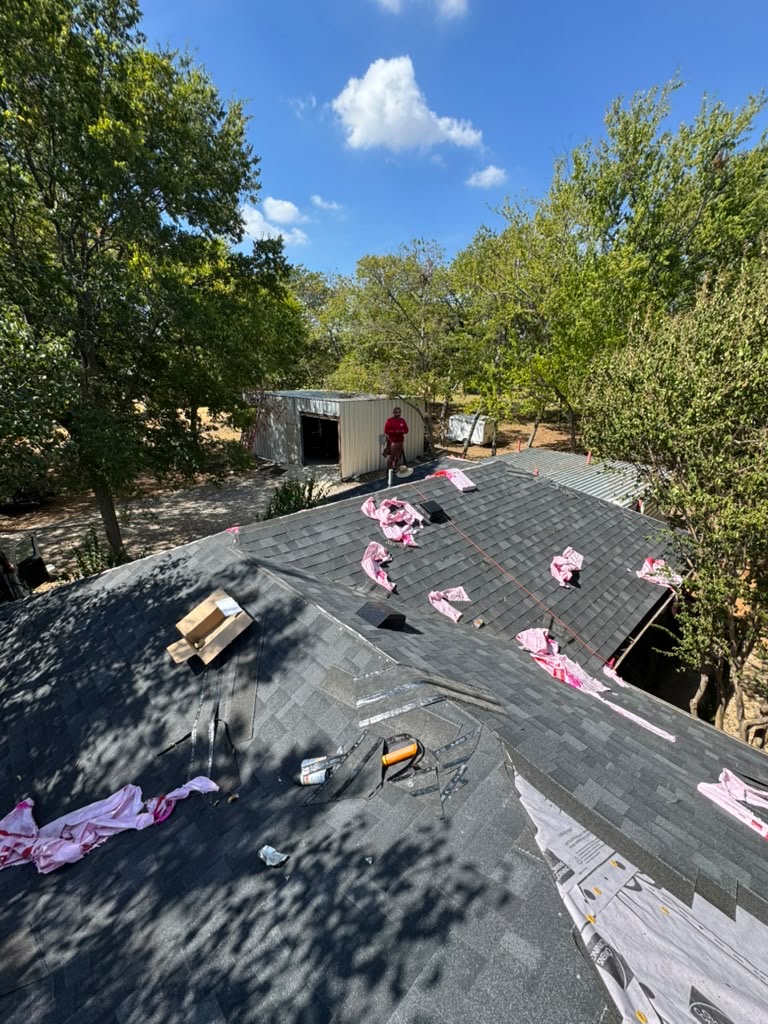
Your roof is one of the biggest investments you'll make in your home. In DFW, where we see everything from scorching sun to intense hail storms, understanding what makes a shingle truly durable is crucial. It's not just about picking the prettiest color; it's about choosing materials that can stand up to North Texas weather for decades.
The Core of Durability: Understanding Asphalt Shingle Composition
When you look at an asphalt shingle, it might seem pretty straightforward. But there's a lot going on beneath the surface that dictates how long it'll protect your home. At its heart, an asphalt shingle is a composite material, and its durability hinges on the quality and combination of its primary components: the mat and the asphalt itself.
Historically, shingles were made with an organic mat, typically a felt saturated with asphalt. This type of shingle is generally thicker and heavier. However, in today's DFW market, you'll most commonly find shingles built on a fiberglass mat. This fiberglass mat is made of a non-woven, randomly oriented glass fiber structure. It's then coated on both sides with a mineral-based asphalt binder. The fiberglass mat provides excellent dimensional stability, meaning it's less prone to expansion and contraction with temperature changes – a huge plus here in Texas where we swing from freezing temps to over 100 degrees Fahrenheit.
The asphalt is the waterproofing element. It's a petroleum-based product that's heated and applied to the mat. The quality of this asphalt is paramount. Manufacturers use different grades and blends to achieve specific performance characteristics. A higher quality asphalt blend will be more resistant to cracking, blistering, and degradation from UV rays. Think of it like the foundation of a house; if the asphalt isn't up to par, the whole shingle suffers.
What most people don't realize is that the asphalt is actually the binder for the other components. It holds the mat together and provides the primary waterproofing. The better the asphalt, the longer it can do its job effectively, especially under the relentless Texas sun.
Granule Power: How Mineral Coatings Shield Your Roof from the Elements
Now, let's talk about what you actually see on the surface of a shingle: those tiny, colorful granules. They're not just for looks; they are a critical defense layer for your roof. These granules are ceramic-coated mineral particles, typically made from crushed stone like quartz or slate. Their primary job is to protect the asphalt layer from the damaging effects of the sun's ultraviolet (UV) radiation. UV rays can break down the asphalt over time, making it brittle and prone to cracking.
A high-quality granule coating is densely packed and uniformly applied. This density ensures maximum UV protection. It also provides resistance to physical abrasion, like wind-driven debris. Ever seen a roof where the granules are washed into the gutters? That's a clear sign the granule layer is failing, and the asphalt underneath is being exposed. This is a major predictor of premature roof failure.
Beyond UV protection, granules also play a significant role in fire resistance. The mineral coating helps to give asphalt shingles a Class A fire rating, which is the highest rating achievable. This is especially important in dry climates like North Texas, where wildfire risks, though perhaps lower than in other regions, are still a consideration.
Some advanced shingles also incorporate special granules designed to reflect solar heat. These are often called cool roof granules. In a place like Dallas or Fort Worth, where summer temperatures regularly climb into the triple digits, these granules can significantly reduce the amount of heat absorbed by your roof, leading to lower attic temperatures and reduced cooling costs for your home. This isn't just about comfort; it's about reducing the thermal stress on the shingle itself, which can further extend its life.
When you get your gutters cleaned, take a look at the debris. If you see a lot of black granules mixed in, it's a strong indicator that your shingles are degrading and losing their protective coating. This is a sign you might need to consider a roof inspection sooner rather than later.
The Backbone: Fiberglass vs. Organic Shingles – Which Offers Superior Strength?
When we talk about shingle construction, the type of mat used is a fundamental difference that directly impacts durability and performance. In the DFW area, you'll primarily encounter two types: fiberglass and organic. Understanding the distinction is key to choosing a roof that will last.
Fiberglass shingles, as I mentioned, use a mat made of glass fibers. This mat is coated with asphalt and then topped with granules. Because the fiberglass mat is non-woven and randomly oriented, it provides excellent tear strength and dimensional stability. This means they're less likely to crack or curl when exposed to the extreme temperature fluctuations we experience here in North Texas. Fiberglass shingles are also lighter than organic ones, which can sometimes be an advantage for older roof structures.
Organic shingles, on the other hand, use a mat made from recycled paper or wood fibers. This mat is then saturated with asphalt. Organic shingles tend to be thicker and heavier than fiberglass shingles. They generally offer good impact resistance but can be more susceptible to curling and cracking in extreme heat if not properly manufactured or installed. They also typically have a lower fire rating compared to fiberglass shingles.
For DFW homeowners, the choice often leans heavily towards fiberglass. The superior dimensional stability in fluctuating temperatures and generally better resistance to the elements make them a more robust option for our climate. While organic shingles might have been the standard years ago, modern manufacturing and materials have made fiberglass the go-to for longevity and performance.
| Feature | Fiberglass Shingles | Organic Shingles |
|---|---|---|
| Mat Composition | Glass fibers bonded with asphalt | Recycled paper/wood fibers saturated with asphalt |
| Weight | Lighter | Heavier |
| Dimensional Stability | Excellent; resists expansion/contraction | Good, but can be more prone to curling/cracking in extreme heat |
| Tear Strength | Higher | Lower |
| Fire Resistance Rating | Typically Class A | Often Class A, but can vary |
| UV Resistance | Excellent when properly granulated | Good, but can degrade faster without robust asphalt |
| Typical Lifespan in DFW | 25-30+ years (with quality installation and materials) | 20-25 years (can be less in harsh climates without premium options) |
| Cost | Mid-range to premium, depending on features | Can be slightly more affordable, but value proposition often favors fiberglass |
As you can see from the table, while both have their merits, fiberglass shingles generally offer a more consistent and robust performance profile for the demands of the DFW climate. When you're looking for a roof that can truly last 30 years or more, understanding this fundamental difference is step one.
Manufacturing Mastery: How Quality Control Impacts Shingle Lifespan
It's easy to think that all shingles from a reputable manufacturer are created equal, but the reality is that the manufacturing process itself plays a massive role in the final product's durability. Even the best raw materials can result in a subpar shingle if the quality control isn't top-notch. This is where understanding the manufacturer's reputation and their commitment to quality becomes crucial for DFW homeowners.
Top-tier shingle manufacturers invest heavily in sophisticated production lines and stringent quality control measures. This starts with sourcing high-quality asphalt, fiberglass, and mineral granules. They conduct rigorous testing on these raw materials to ensure they meet specific standards for consistency and performance.
During the manufacturing process, every step is monitored. This includes the precise application of asphalt to the mat, ensuring uniform coverage and thickness. It also involves the even distribution of granules to provide complete UV protection and aesthetic appeal. Any deviation in these steps can lead to weak spots in the shingle, making it more susceptible to damage from wind, hail, or sun exposure.
Modern manufacturing facilities use advanced sensors and automated systems to detect flaws in real-time. This could be anything from an inconsistent asphalt coating to a gap in the granule layer. Shingles that don't meet these strict standards are typically rejected. This commitment to eliminating defects before the product even leaves the factory is what separates a premium shingle from a budget option.
Cheaper shingles often cut corners on quality control. This can lead to inconsistencies in their construction, resulting in premature failure. While the initial cost might seem attractive, the long-term cost of replacing a prematurely failed roof far outweighs any upfront savings. Always look for shingles from manufacturers with a proven track record of quality.
For DFW homeowners, selecting shingles from manufacturers known for their rigorous quality control is a direct investment in the longevity of your roof. Brands like GAF, Owens Corning, and CertainTeed have built their reputations on consistent quality and advanced manufacturing processes. This ensures that the shingles you install today are designed to perform as expected for their rated lifespan, even under the challenging conditions of North Texas.
DFW's Fury: How Wind and Hail Test Shingle Resilience
Living in the Dallas-Fort Worth area means living with weather that can be incredibly harsh on your roof. We're not just talking about the relentless sun; we're talking about the dramatic shifts and powerful forces that can take years off a shingle's life if it's not built to withstand them.
Wind is a major culprit. DFW experiences significant wind events, especially during storm seasons. High winds can lift shingles, peel them back, and even rip them completely off the roof deck. This not only exposes the underlayment and roof deck to water but also compromises the integrity of the entire roofing system. Shingles are rated for wind resistance, typically based on their ability to withstand certain wind speeds. A standard architectural shingle might be rated for 60-70 mph winds, while premium shingles, often with enhanced nailing strips or adhesive systems, can be rated for 110-130 mph winds or more. For DFW, opting for shingles with higher wind ratings is a smart move.
Then there's hail. DFW is part of "Hail Alley," and we get our fair share of damaging hailstorms. Hail impacts can cause bruising and cracking in shingles. While a small hailstone might only cause superficial damage that's hard to see, larger hailstones can fracture the asphalt and even break through the granule layer. This damage weakens the shingle, making it more susceptible to leaks and further deterioration from sun and wind. Shingles designed for hail resistance, often called impact-resistant shingles, have special reinforcements, like a stronger backing material or a more flexible asphalt, that allow them to absorb the impact without fracturing.
The combination of these forces is what truly tests a shingle's durability. A shingle that can withstand high winds might still be susceptible to hail damage, and vice versa. That's why choosing shingles that offer a balanced resistance to both is so important for a long-lasting roof in our region. It's not just about the shingle itself, but how well it's engineered to handle the specific environmental stresses DFW throws at it.
When evaluating shingles, look for their ratings in wind speed resistance and impact resistance (often expressed as Class 1, 2, 3, or 4, with Class 4 being the highest). These ratings are your best indicators of how well a shingle will perform under the duress of North Texas weather.
Beyond the Shingle: Underlayment and Installation – The Unsung Heroes of Durability

We've talked a lot about the shingle itself – its composition, its granules, its resistance to wind and hail. But here's the thing: even the most durable shingle in the world won't last its full lifespan if it's not installed correctly over the right underlayment. This is where many homeowners overlook critical factors, and it's often the installation and the layers beneath the shingles that dictate long-term success.
First, let's talk about underlayment. This is the protective layer that goes directly over your roof deck, beneath the shingles. It acts as a secondary water barrier. If water somehow gets past the shingles (which can happen, especially after a severe storm), the underlayment is the last line of defense before it reaches your home. There are different types:
- Asphalt-Saturated Felt: The traditional choice. It's cost-effective but can degrade over time, especially in extreme heat.
- Synthetic Underlayment: These are newer, lighter, and stronger materials made from polypropylene or polyethylene. They offer superior tear resistance, are waterproof, and often have better UV resistance. For DFW's intense sun, synthetic underlayment is a much more durable choice.
Key Insight
Many building codes in DFW now require specific types of underlayment, especially for new construction or re-roofing projects. Always ensure your contractor is using materials that meet or exceed local building codes and manufacturer specifications. A good synthetic underlayment is a small investment that significantly boosts your roof's overall durability and protects against water intrusion.

Next, and arguably most importantly, is the installation. Even the highest-rated shingles can fail prematurely if installed improperly. This includes:
- Proper Nailing: Shingles need to be nailed at the correct location and depth. Too shallow, and they can blow off. Too deep, and they can damage the shingle or create a weak point. The nailing line is critical, and in high-wind areas like DFW, many shingles have an expanded nailing strip for extra security.
- Sealant Strips: Most architectural shingles have a sealant strip that bonds the shingles together when activated by the sun's heat. This creates a monolithic surface that resists wind uplift. If shingles aren't laid correctly, or if the sealant strip is defective, this bond won't form properly.
- Flashing and Ventilation: Proper flashing around chimneys, vents, skylights, and valleys is essential to prevent water intrusion. Equally important is adequate attic ventilation. Poor ventilation traps heat and moisture, which can degrade roofing materials from the inside out, shortening their lifespan.
At Montesco Roofing, we emphasize that a roof is a system. The shingle is just one part. The underlayment, flashing, ventilation, and, of course, the meticulous installation by trained professionals are all equally vital for achieving that 30+ year lifespan we're aiming for. You can't skimp on any of these elements and expect maximum durability.
How to Get This Done
If you want to handle this yourself, here's exactly what you need: A thorough understanding of shingle manufacturer installation manuals, correct nailing patterns for your specific shingle and local wind codes, proper flashing techniques for all roof penetrations, and knowledge of attic ventilation requirements. If you'd rather have experienced roofers handle it, our team has done this on hundreds of DFW homes — here's how our process works: We start with a detailed inspection, use high-quality synthetic underlayment, ensure proper nailing and sealing according to manufacturer specs and local codes, and install appropriate ventilation systems to create a truly durable roof.
Choosing Wisely: 7 Factors for Selecting a Durable Shingle in DFW
So, you're ready to invest in a roof that will last. What are the key things you should be looking for when selecting shingles specifically for the DFW climate? It's a combination of material science, performance ratings, and practical considerations. Here are 7 factors that are crucial for ensuring your shingle durability:
- Manufacturer Reputation: Stick with established brands known for quality and consistency. Companies like GAF, Owens Corning, and CertainTeed have decades of experience and offer reliable warranties. Avoid lesser-known or "off-brand" shingles, as their quality control and material sourcing can be questionable.
- Shingle Type (Architectural/Laminate): For durability and longevity in DFW, architectural or laminate shingles are almost always the best choice over 3-tab shingles. They are thicker, have a more dimensional appearance, and are built to withstand more abuse.
- Wind Resistance Rating: Given DFW's susceptibility to high winds, look for shingles with a strong wind rating, ideally 110 mph or higher. This often involves shingles with enhanced nailing strips or advanced adhesive systems.
- Impact Resistance Rating (Class 4): If hail is a significant concern (and it is here in DFW), opt for shingles with a Class 4 impact rating. These shingles are designed to absorb the shock of hailstones without fracturing, significantly reducing the risk of hail damage.
- Granule Adhesion and Coverage: Visually inspect shingle samples if possible, or ask your contractor about the density and quality of the granule coating. Good adhesion prevents granules from washing off prematurely, protecting the asphalt from UV rays.
- Warranty: A strong manufacturer's warranty is a good indicator of the shingle's expected lifespan and the manufacturer's confidence in their product. Look for limited lifetime warranties, and pay attention to the terms regarding wind and hail coverage. Remember, the warranty is only as good as the company backing it.
- Contractor Recommendation & Installation Quality: This is perhaps the most critical factor. A durable shingle installed by an inexperienced or careless contractor will fail prematurely. Choose a reputable DFW roofing contractor who understands the nuances of installing shingles for our climate and offers a solid workmanship warranty.
Standard 3-Tab Shingle
Basic protection, lower wind resistance, less dimensional stability. Typically rated for 20-25 years. Not ideal for harsh DFW weather.
Architectural/Laminate Shingle (Mid-Grade)
Good durability, better wind resistance (up to 70 mph), more dimensional look. Typically rated for 25-30 years. A solid choice for many DFW homes.
Premium Architectural Shingle (High-Performance)
Enhanced durability, superior wind resistance (110+ mph), often Class 4 hail impact rated, better granule adhesion. Designed for 30+ years in challenging climates like DFW.
Making an informed choice involves looking beyond just the price tag. It's about understanding the technology, the ratings, and how they align with the specific challenges of living in North Texas. A premium shingle, when properly installed, is an investment that pays dividends in peace of mind and long-term protection.
Montesco Roofing's Commitment to Long-Lasting Shingle Solutions
Here at Montesco Roofing, we've been protecting homes across the Dallas-Fort Worth metroplex for over 13 years. We've seen firsthand what works and what doesn't when it comes to roofing materials in our unique climate. Our commitment isn't just about replacing a roof; it's about installing a system that provides lasting protection and value for your home.

When it comes to shingle durability, we don't cut corners. We partner with leading manufacturers like GAF, Owens Corning, and CertainTeed, selecting shingles that have proven their mettle against Texas weather. We prioritize architectural or laminate shingles with high wind and impact resistance ratings, understanding that these are essential for longevity here.
Our installation process is where our expertise truly shines. We adhere strictly to manufacturer specifications and local building codes. We use high-quality synthetic underlayment as a standard for its superior performance and durability. Our crews are meticulously trained in proper nailing techniques, sealant activation, and the critical details of flashing and ventilation. We believe a roof is only as strong as its weakest point, and we ensure every component is installed correctly.
"We treat every home like it's our own. That means using the best materials we can find and installing them with the precision and care that ensures they'll stand the test of time, especially here in DFW where the weather can be so unforgiving."— Montesco Roofing Expert
We understand that choosing a roofing contractor is a big decision. That's why we offer free, no-obligation inspections and transparent estimates. We'll walk you through the options, explain why certain shingles and installation methods are best suited for your home, and answer all your questions. Our goal is to empower you to make an informed decision that leads to a durable, beautiful roof you can rely on for decades to come.
For homeowners in Frisco, Plano, McKinney, Allen, Richardson, Arlington, Fort Worth, Garland, Mesquite, Rowlett, and surrounding DFW areas, choosing Montesco Roofing means choosing a partner dedicated to the long-term health and protection of your home. We stand behind our work with a strong workmanship warranty, giving you added peace of mind.
Ready to ensure your roof's durability for years to come? Our team has protected hundreds of DFW homes with long-lasting shingle solutions. Tell us about your roof — free inspection, no pressure.
Get Your Free Roof Inspection →Frequently Asked Questions About Shingle Durability
Frequently Asked Questions About Shingle Durability
What is the average lifespan of asphalt shingles in DFW?
Are "impact-resistant" shingles worth the extra cost in Texas?
How does the Texas sun affect shingle durability?
What's the difference between a 25-year shingle and a 30-year shingle?
Can a roof leak if the shingles aren't damaged?
What role does the nailing pattern play in shingle durability?
Montesco Roofing Team
DFW's trusted roofing contractor with 13+ years of experience. Specializing in roof replacements, storm damage repair, and insurance claims across Dallas-Fort Worth.
Get in touch →