The Foundation of Your Roof Defense

What Exactly is Ice & Water Shield? The Foundation of Your Roof Defense
Alright, let's talk about something that doesn't get enough credit but is absolutely vital to keeping your home dry and protected: ice and water shield. Now, I've been on roofs all over the Dallas-Fort Worth metroplex for over 13 years, and I've seen firsthand what happens when this critical layer is overlooked or improperly installed. It’s not just a fancy piece of felt; it’s a robust, self-adhering waterproofing membrane that acts as a second line of defense for your home, especially in those vulnerable spots where water likes to sneak in. Think of it as the unsung hero of your roofing system. While everyone focuses on the shingles – and they're important, don't get me wrong – this underlayment is what truly seals the deal against moisture intrusion. It’s designed to stick directly to the roof deck, creating a powerful barrier that stops water from getting past your shingles, even in the most challenging weather DFW throws at us. We're talking about heavy rains, wind-driven storms, and yes, even those rare but possible icy spells.
In 2026, with the climate patterns we're experiencing, having a solid defense against water is more important than ever. This isn't just about preventing a drip in your attic; it's about safeguarding the structural integrity of your entire home. Water is a persistent enemy, and it can cause a cascade of problems, from mold and mildew growth to rot in your roof decking and even damage to your home's insulation and drywall. By understanding what ice and water shield is and where it’s used, you’re already a step ahead in protecting your most valuable asset.
The Silent Threat: How Water Intrusions Destroy DFW Roofs (and Your Wallet)
You know, it's funny. Most homeowners worry about the big, dramatic stuff – a tree falling on the roof, a major hail storm. And those are definitely concerns. But the real silent killer, the one that can cause thousands of dollars in damage before you even realize there's a problem, is persistent water intrusion. Here in North Texas, we get our fair share of intense storms. We're talking about torrential downpours that can last for hours, and sometimes, that water gets under your shingles. It can be driven by strong winds, or it can back up at valleys and eaves, especially if there's any freezing involved, however brief.
Don't wait for visible signs of a leak inside. Regularly check your attic for daylight or damp spots on the underside of the roof deck. Early detection is key to preventing minor issues from becoming major headaches.
When water finds its way past the shingles, it hits the underlayment. If that underlayment is just standard felt paper, it can get saturated, and water can eventually seep through to the roof deck. That's where the real damage begins. The wood deck can start to rot, weakening its structure. This rot can spread, creating soft spots that could eventually lead to a roof collapse, though that's rare. More commonly, it leads to mold and mildew growth, which is terrible for air quality in your home and can be a serious health hazard. Plus, that moisture can soak into your insulation, drastically reducing its effectiveness. This means higher energy bills in the summer and winter because your HVAC system has to work twice as hard to maintain a comfortable temperature. And all of this can happen without you seeing a single water stain on your ceiling for months, even years.
Many less experienced or "storm chaser" roofing companies might skimp on ice and water shield installation, especially in areas where it's not explicitly required by the most basic building codes. However, for a roof built to last in the DFW climate, it's a non-negotiable component for true protection.
Then there's the issue of ice dams. While we don't get prolonged, deep freezes like some northern states, we do experience periods of freezing temperatures, and when combined with melting snow or ice, ice dams can form. These dams can create a pool of water at your eaves that then backs up under your shingles. This is exactly the kind of scenario that ice and water shield is designed to prevent. It creates a watertight seal that stops that backed-up water from reaching your roof deck. So, while it might seem like an extra expense upfront, the cost of repairing water damage, mold remediation, and replacing compromised insulation far outweighs the investment in a high-quality ice and water shield membrane. It’s a proactive measure that saves you significant money and headaches down the road. We’ve seen homes in areas like Frisco and Plano suffer extensive damage from water that could have been prevented with proper underlayment.
7 Critical Areas Where Ice & Water Shield is Non-Negotiable for DFW Homes
So, where exactly do we install this stuff? It’s not usually the entire roof, though in some extreme cases or on certain roof designs, it might be. For most standard residential roofs here in DFW, we focus on the areas that are inherently more vulnerable to water intrusion. These are the places where water tends to collect, back up, or is subjected to the most stress. Getting these areas right is paramount to a truly waterproof roof.
1. Eaves and Drip Edges
This is where water tends to run off the roof. In freezing conditions, water can back up and freeze, forming ice dams. The shield here creates a barrier against this type of backup.
2. Valleys
Valleys are where two roof planes meet. They are designed to channel large amounts of water. If shingles in a valley are damaged or improperly installed, water can easily penetrate the deck.
3. Rake Edges
These are the sloped edges of the roof, typically on the gable ends. Wind-driven rain can be pushed up under shingles along the rake edge.
4. Around Chimneys
Chimneys are penetrations through the roof. The flashing around them is a critical point, but the underlayment provides an extra layer of protection against any water that might get past the flashing.
5. Skylights
Similar to chimneys, skylights are roof penetrations. Proper flashing is essential, but ice and water shield adds a significant layer of defense against leaks around these features.
6. Plumbing Vents and Other Penetrations
Anywhere something pokes through your roof – plumbing vents, exhaust fans – is a potential entry point for water. The shield reinforces these areas.
7. Low-Slope or Flat Roof Sections
While not as common on typical DFW homes, if you have sections with very low slopes, they are more prone to standing water, making a full or partial application of ice and water shield highly advisable.
When we're inspecting a roof in Arlington or Fort Worth, we're specifically looking at these areas. The goal is to anticipate where water is most likely to cause problems and proactively seal those spots. It’s about building a roof that’s not just beautiful but also incredibly resilient. For instance, the amount of rain that can come down during a strong Texas thunderstorm can overwhelm standard roofing materials if they aren't properly protected at these critical junctures. This focus on vulnerable zones is a key part of what makes a Montesco roof stand up to the elements year after year.
Beyond the Shingles: The Layered Protection of Modern Roofing Systems
It's easy to think of a roof as just shingles. But a truly high-performance roof is a complex, multi-layered system, and each layer plays a vital role. Think of it like building a high-quality jacket: you have the outer shell, the insulation, and the inner lining, all working together to keep you protected. Your roof is no different. Understanding this layered approach helps you appreciate why every component, including that often-overlooked ice and water shield, is so important for the long-term health of your home.
Key Insight
The National Roofing Contractors Association (NRCA) emphasizes that modern roofing systems are designed with multiple layers of protection to ensure durability and weather resistance. This integrated approach is what differentiates a quality roof installation from a basic one.
At the very bottom, you have the roof deck, usually plywood or OSB. This is the structural foundation. Directly on top of that, we install the underlayment. This is where the ice and water shield comes in. It’s a waterproofing membrane that provides a secondary barrier against moisture. Depending on the type of roof and local codes, this might be a synthetic underlayment or, in critical areas, the self-adhering ice and water shield. On top of the underlayment, we have drip edges, which are metal flashing pieces installed along the eaves and rakes to direct water away from the fascia and into the gutters. Then, of course, come the shingles themselves – asphalt, metal, tile, whatever your choice. They are the primary defense against the elements, but they are not waterproof on their own. They are designed to shed water when installed correctly over a proper underlayment system.
Finally, you have ridge vents and soffit vents, which are part of the ventilation system. Proper attic ventilation is crucial for preventing heat and moisture buildup, which can lead to premature shingle decay and structural damage. So, when we talk about protecting your home, we're not just talking about slapping on some shingles. We're talking about a meticulously designed system where each layer works in harmony. The ice and water shield is a critical component of that system, especially in areas like Plano and Richardson, where we see a wide range of weather conditions.
Ice Dams & Wind-Driven Rain: How Shield Stands Strong Against Texas Weather Extremes
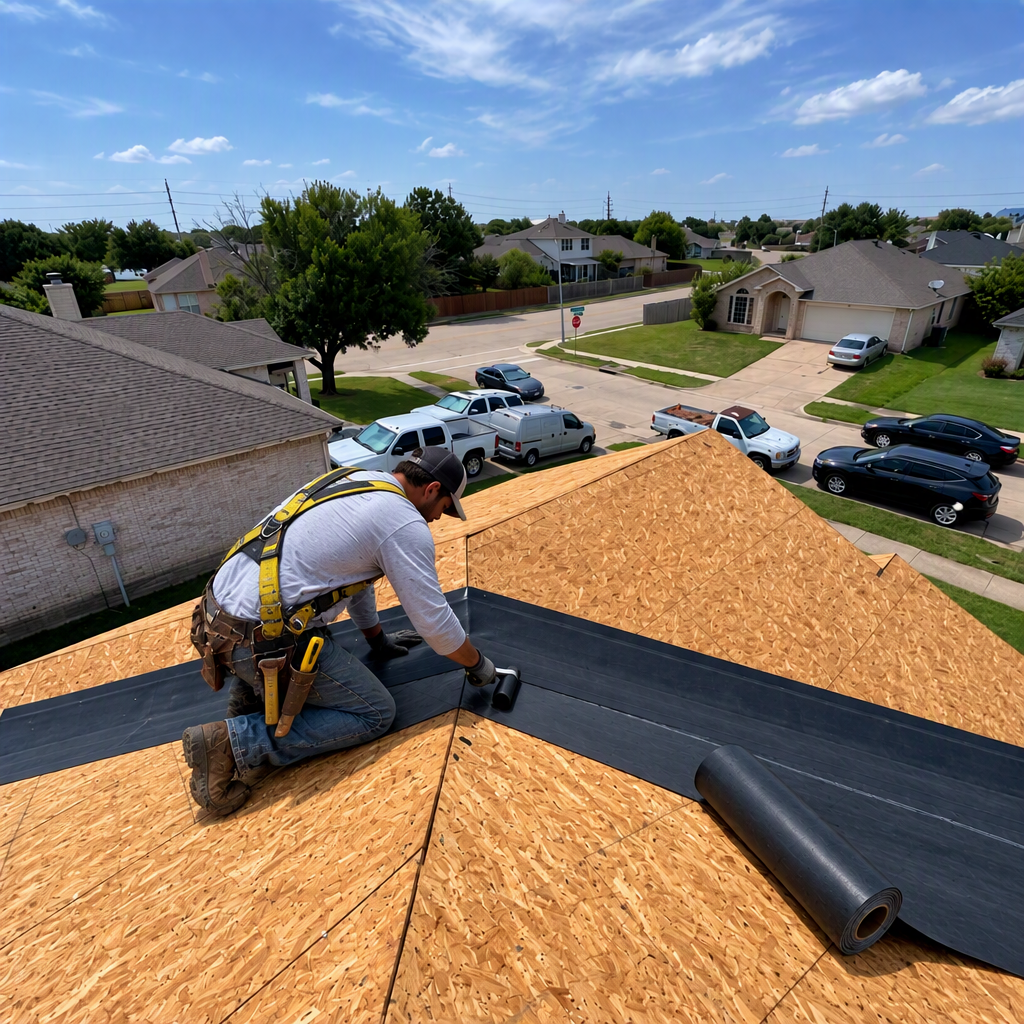
Now, you might be thinking, "Ice dams? In Texas?" And you're right, we're not exactly known for blizzards. But that doesn't mean ice and water shield isn't essential here. Our weather is famously unpredictable. We can have warm spells followed by sharp freezes, and that's often enough to create an ice dam situation. When snow or ice melts on a warmer day and then refreezes overnight, it can form a dam along the eaves. This dam traps melting water, forcing it to back up behind it. If this backed-up water gets under your shingles, it can seep into your attic and cause significant damage. This is precisely why applying ice and water shield along the eaves is so critical, even in DFW.
"In regions with fluctuating winter temperatures, ice dams can form even with relatively light snowfall. The self-adhering nature of ice and water shield provides a reliable seal against this kind of persistent water intrusion."— A Roofing Industry Expert
But it's not just about ice. Wind-driven rain is a far more common threat here in Texas. Think about those severe thunderstorms that roll through, with wind gusts that can literally push rain sideways, upwards, and into every tiny crevice. Shingles are designed to shed water when it falls vertically, but wind-driven rain puts them under a lot of stress. In areas like valleys, around penetrations, and along the rake edges, wind can force water up and under the shingles. This is where the self-adhering ice and water shield truly shines. Its sticky backing creates a powerful seal to the roof deck, preventing that wind-driven water from getting through, even when the shingles themselves might be momentarily compromised by the storm's intensity.
Wind-Driven Rain Scenario
Imagine a powerful gust of wind during a summer storm. Rain is being forced upwards towards your roof's rake edge. Without adequate ice and water shield, this water can seep under the shingles and felt underlayment, reaching the roof deck and potentially entering your attic. With the shield, this water is stopped at the membrane, protecting your home's structure.
When we install ice and water shield, we ensure it's properly rolled out, adhered firmly, and that all laps and seams are sealed according to manufacturer specifications. This meticulous attention to detail is what makes the difference. It’s not just about putting a product on the roof; it’s about installing it correctly so it performs when you need it most. For homeowners in Rowlett or Mesquite, who frequently deal with intense storm activity, this level of protection is invaluable.
The Cost of Neglect: Comparing the Price of Prevention vs. Catastrophic Repair in 2026
Let's get down to brass tacks. Nobody likes spending money on their roof, but the reality is, it's one of the most critical investments you'll make in your home. When it comes to ice and water shield, there's a clear choice between being proactive and reactive. Being reactive means waiting for a leak to appear, which is often a sign that significant damage has already occurred. Being proactive means investing in the right materials and installation from the start. In 2026, with the rising costs of materials and labor, the difference between these two approaches can be staggering.
| Feature | Basic Installation (No or Minimal Shield) | Premium Installation (With Strategic Ice & Water Shield) |
|---|---|---|
| Initial Material Cost | Slightly lower | Higher (due to premium underlayment) |
| Risk of Interior Water Damage | High (especially in vulnerable areas) | Significantly Lower |
| Potential for Mold/Mildew Remediation | Moderate to High | Very Low |
| Attic Insulation Damage & Replacement | Likely over time | Highly Unlikely |
| Roof Deck Rot & Replacement | Possible, especially after severe storms | Extremely Rare |
| Energy Efficiency Impact | Can decrease due to damaged insulation | Maintained |
| Long-Term Cost of Ownership | Potentially Thousands more in repairs and energy bills | Lower, due to preventative measures |
| Peace of Mind | Low, constant worry about leaks | High, knowing your home is protected |
Consider this: a roll of high-quality ice and water shield might cost a few hundred dollars. If it prevents just one significant water intrusion event that would have otherwise caused $5,000-$10,000 in damage to your attic, insulation, and drywall, it has already paid for itself many times over. Add to that the cost of mold remediation, which can easily run into the thousands, and the potential structural repairs if your roof deck rots, and the savings become even more dramatic. We’ve seen clients in Garland and University Park who opted for cheaper options initially, only to face massive repair bills years later after a series of storms. It’s a lesson learned the hard way.
The reality in 2026 is that cutting corners on essential roofing components like ice and water shield is a false economy. It’s like buying a cheap raincoat that leaks in the first rainstorm. You might save a few bucks upfront, but you'll end up soaked and miserable, and you'll have to buy a new one anyway. For us at Montesco Roofing, ensuring your roof has robust protection, especially in those key areas, is part of our commitment to building roofs that last. It’s about protecting your investment and your family’s comfort and safety.
Montesco Roofing's Commitment: Ensuring Your Roof Has the Best Defense
Here at Montesco Roofing, we're not just slapping shingles on and calling it a day. We've been serving the DFW area for over 13 years, and our reputation is built on quality, integrity, and a genuine desire to protect your home as if it were our own. That means we sweat the small stuff, especially when the "small stuff" like ice and water shield can make the biggest difference in the long run. We understand that your roof is one of the most important systems in your home, and we treat it with the respect it deserves.
How to Get This Done
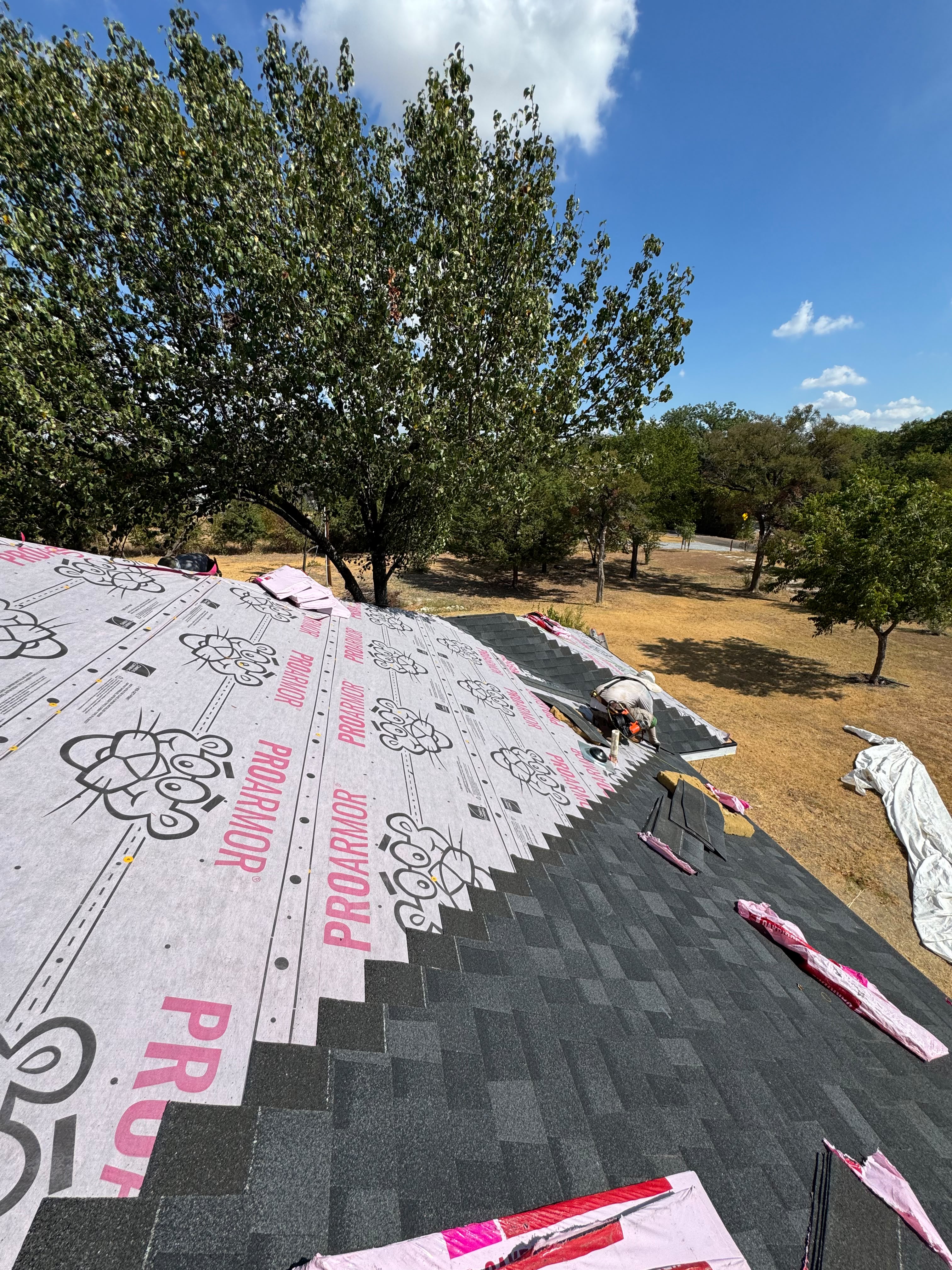
If you want to handle this yourself, it requires specialized knowledge of roof deck preparation, proper sealing techniques, and understanding local building codes. It's generally not recommended for DIYers due to the critical nature of the work and the safety risks involved. If you'd rather have experienced roofers handle it, our team has installed high-quality ice and water shield on hundreds of DFW homes — here's how our process works: We meticulously prepare the roof deck, ensuring it's clean and dry. We then carefully install the self-adhering membrane in all critical areas, ensuring proper overlap and adhesion. Finally, we install your chosen shingles over this robust waterproof barrier, guaranteeing a system designed for longevity and protection.
When we provide a proposal for a new roof or a significant repair, we detail exactly where and how we will be using ice and water shield. We don't cut corners. We use premium materials from trusted manufacturers, and our installation crews are trained to adhere to the highest standards. We know that the DFW climate, with its intense sun, sudden storms, and occasional temperature swings, can be tough on roofs. That's why we believe in building roofs that are not just code-compliant but are built to exceed expectations for durability and protection.

Key Takeaways
- Ice and water shield is a vital waterproofing membrane, not just an option.
- It's essential for protecting vulnerable areas like eaves, valleys, and penetrations.
- It defends against both wind-driven rain and potential ice damming in DFW.
- Investing in proper installation prevents costly interior damage, mold, and structural issues.
- Montesco Roofing is committed to using high-quality ice and water shield as part of a comprehensive roofing system.
We stand behind our work with strong warranties, giving you peace of mind knowing that your investment is protected. If you're in Dallas, Fort Worth, or any surrounding community and you're concerned about your roof's protection, especially after a storm or as it ages, give us a call. We're happy to come out, inspect your roof, and explain exactly how we can ensure it has the best defense against whatever the Texas weather throws at it. Our goal is always to provide a roofing solution that offers superior protection and lasting value.
Frequently Asked Questions About Ice & Water Shield for DFW Homeowners
Frequently Asked Questions
Is ice and water shield necessary in Texas if we don't get much snow and ice?
Where is ice and water shield typically installed on a roof?
What's the difference between ice and water shield and regular roofing felt or synthetic underlayment?
Can I see if my current roof has ice and water shield installed?
How does ice and water shield contribute to the longevity of my roof?
Will adding ice and water shield significantly increase the cost of a new roof?
Need help putting this into action? Our team has protected hundreds of DFW homes with robust roofing systems, including strategic ice and water shield installation. Tell us about your roof — free inspection, no pressure.
Get Your Free Roof Inspection →Montesco Roofing Team
DFW's trusted roofing contractor with 13+ years of experience. Specializing in roof replacements, storm damage repair, and insurance claims across Dallas-Fort Worth.
Get in touch →