DFW May Storms 2026: The 7-Point Roof Inspection Checklist Every Homeowner Needs NOW
The Unseen Threat: Why May Storms in DFW Demand Immediate Roof Attention
Saturday, May 16, 2026. If you're a homeowner in Dallas-Fort Worth, you know that May can be a wild month. We've just wrapped up another spring season that's brought its fair share of severe weather – intense thunderstorms, high winds, and yes, even hail. These DFW May storms aren't just a nuisance; they can cause significant, often unseen, damage to your most critical home asset: your roof. What most people don't realize is that even a seemingly minor storm can create vulnerabilities that lead to bigger problems down the road, especially as we head into the hotter summer months. Ignoring that slight leak or those few missing shingles could mean dealing with costly water damage, mold growth, or even structural issues later. It's not just about aesthetics; it's about protecting your investment and ensuring the safety of your family.
Here in DFW, our roofing systems are constantly tested. May storms, in particular, can bring a potent cocktail of high winds that lift shingles and golf-ball-sized hail that can cause impact damage. The key is to act fast. The longer damage sits exposed, the more opportunities water has to seep in and wreak havoc.
Think about it: a strong gust of wind can lift shingles just enough to compromise their seal, allowing rain to penetrate. Hail, even if it doesn't shatter a shingle, can bruise the asphalt matting underneath, creating a weak spot that will fail prematurely. And let's not forget the debris – tree branches, leaves, and other storm-borne projectiles can cause direct impact damage or clog your gutters, leading to water backup. This is why a thorough, prompt inspection isn't just recommended; it's essential for every DFW homeowner after a significant weather event.
At Montesco Roofing, we've been serving the Dallas-Fort Worth area for over 13 years, and we've seen firsthand the devastation that unchecked storm damage can cause. We understand the local climate, the common culprits, and the subtle signs that indicate a problem. Our goal is to empower you with the knowledge to protect your home. This isn't about selling you a new roof; it's about helping you understand your home's condition and make informed decisions. This checklist is designed to be your first line of defense, helping you spot issues before they escalate into major headaches and expenses.
Your 7-Point Post-Storm Roof Inspection Checklist: A Step-by-Step Guide
After the thunder has faded and the rain has stopped, your roof might be silently suffering. Don't wait for a drip in the living room to signal a problem. A proactive inspection is your best bet for catching damage early. This 7-point checklist is designed to guide you through a comprehensive assessment of your roof's health, covering both the visible and the less obvious indicators of trouble. Remember, safety first. If you're uncomfortable or unable to safely access certain areas, it's always best to call in a professional roofing contractor.
Step 1: Visual Exterior Scan (Ground Level)
Start from the street. Look for obvious signs of damage like missing shingles, torn sections, or debris on the roof. Note any sagging areas.
Step 2: Gutter & Downspout Check
Examine gutters for dents, loose sections, or excessive amounts of shingle granules, which indicate shingles are breaking down.
Step 3: Shingle Condition Assessment
Look for cracked, curled, or lifted shingles. Check for missing granules on the surface of the shingles.
Step 4: Flashing & Vent Inspection
Inspect around chimneys, vents, skylights, and valleys. Look for bent, loose, or missing flashing, which is critical for sealing these areas.
Step 5: Attic Interior Check
Safely enter your attic. Look for daylight peeking through the roof deck, water stains, or damp insulation.
Step 6: Interior Ceiling & Wall Inspection
Check ceilings and walls, especially in the uppermost rooms, for new water stains, discoloration, or peeling paint.
Step 7: Document Everything
Take clear photos or videos of any damage you find. This documentation is vital for insurance claims and repair estimates.
This systematic approach ensures you don't miss any potential problem areas. Remember, even small issues can snowball. For instance, clogged gutters, a common aftermath of DFW storms, can cause water to back up under your shingles or seep into your fascia boards, leading to rot. That's why checking your gutters is just as important as looking at the shingles themselves.
Exterior Inspection: What to Look For on Your Shingles, Flashing, and Gutters
The exterior of your roof is the first line of defense, and it's where most storm damage will manifest. Taking the time for a thorough exterior inspection can save you a world of trouble. We're talking about everything from the shingles themselves to the critical sealing points like flashing.
Understanding Shingle Damage
Asphalt shingles are designed to withstand a lot, but they have their limits. After a storm, look for these common issues:
- Granule Loss: Shingles have a protective layer of mineral granules. If you find a significant amount of these in your gutters or downspouts, it means the shingles are wearing down faster than they should, compromising their ability to shed water and resist UV rays. This is a tell-tale sign of impact damage from hail or excessive wear from wind.
- Cracked or Bruised Shingles: Hail can cause "bruising" – impact marks that don't necessarily break the shingle but weaken the asphalt matting underneath. This makes them susceptible to cracking under normal expansion and contraction.
- Curled or Cupped Shingles: Wind can lift shingles, causing them to curl at the edges. This compromises the seal and allows water to get underneath.
- Lifted or Missing Shingles: This is the most obvious sign of wind damage. Even a few missing shingles can expose the underlayment and decking to the elements, leading to rapid water intrusion.
Flashing is another critical area. This is the metal or plastic material used to waterproof joints and transitions on your roof, such as around chimneys, vent pipes, skylights, and where roof planes meet (valleys). Wind can bend or tear flashing, and hail can dent it, creating gaps where water can enter. Pay close attention to the seals around these penetrations. A compromised flashing system is a direct invitation for leaks.
Storms often bring down branches and other debris. While large debris might cause obvious damage, smaller items can lodge themselves under shingles or in valleys, holding moisture against the roofing material and accelerating decay.
Your gutters and downspouts are your roof's drainage system. After a storm, they're often clogged with leaves, twigs, and, importantly, shingle granules. If your gutters are overflowing, or if you see a thick layer of granules in them, it's a clear indicator that your roof is shedding its protective layer. Clogged gutters can force water back up under your shingles, leading to rot in the fascia boards and soffits, and can even contribute to ice dams in colder months (though less of a concern in May, it's a sign of a compromised system).
How to Get This Done
For a safe exterior inspection, use binoculars from the ground to check shingles and flashing from a distance. If you need to get closer, ensure you have a sturdy ladder and a spotter. If you see significant damage, or if you're hesitant to inspect yourself, Montesco Roofing offers free, no-obligation roof inspections. Our trained technicians have the experience and safety equipment to assess your roof thoroughly after any storm.
Interior Clues: Detecting Leaks and Attic Damage from Above
Sometimes, the first sign of roof trouble isn't visible from the street. The interior of your home, particularly your attic, can provide crucial clues about the integrity of your roof system. These are the "hidden" damages that can turn a small problem into a major repair if left unaddressed.
Your Attic: The Roof's Inner Sanctum
Your attic is essentially the space between your roof deck and your ceiling. It's a critical area to inspect after a storm because it's where you'll first see evidence of water intrusion before it becomes a visible stain on your ceiling. Here's what to look for:
- Daylight: With a flashlight, carefully scan the underside of your roof decking. If you see any light peeking through, that's a direct indication of a hole or gap where water can enter.
- Water Stains or Dark Spots: Look for any discoloration on the roof decking, rafters, or insulation. These are signs of past or present moisture. Even if it looks dry now, it indicates a leak point.
- Wet or Damp Insulation: Damp insulation loses its effectiveness and can become a breeding ground for mold and mildew. It can also weigh down the ceiling below.
- Mold or Mildew Growth: Any sign of fuzzy or discolored patches on wood or insulation is a serious concern. Mold can spread quickly and impact indoor air quality.
Beyond the attic, take a walk through the highest level of your home. Look at your ceilings and the walls where they meet the ceiling. Are there any new water stains, rings, or discoloration? Even small, faint spots can be the beginning of a problem. Sometimes, water can travel along rafters or joists before dripping, so a stain might appear far from the actual roof breach. This is why it's important to check all upper-level surfaces.
Don't forget to inspect the attic access hatch itself and the surrounding ceiling. Sometimes, water can pool around the hatch or seep through poorly sealed edges. If you have recessed lighting or ceiling fans in the upper level, check around those fixtures as well. Any sign of moisture or staining around these elements could indicate a leak originating from above.
Key Takeaway: Your attic and upper-level ceilings are your roof's early warning system. Regular checks after storms can prevent minor leaks from escalating into major water damage and mold issues.
Beyond the Obvious: Identifying Subtle Signs of Wind and Hail Damage

Not all storm damage is dramatic. Sometimes, the most insidious damage is the kind you have to look closely for – the subtle signs that indicate your roof is under stress and might fail sooner than expected. These are the indicators that a seasoned DFW roofing contractor knows to look for.
The "Bruise" of Hail: Granule Loss Patterns
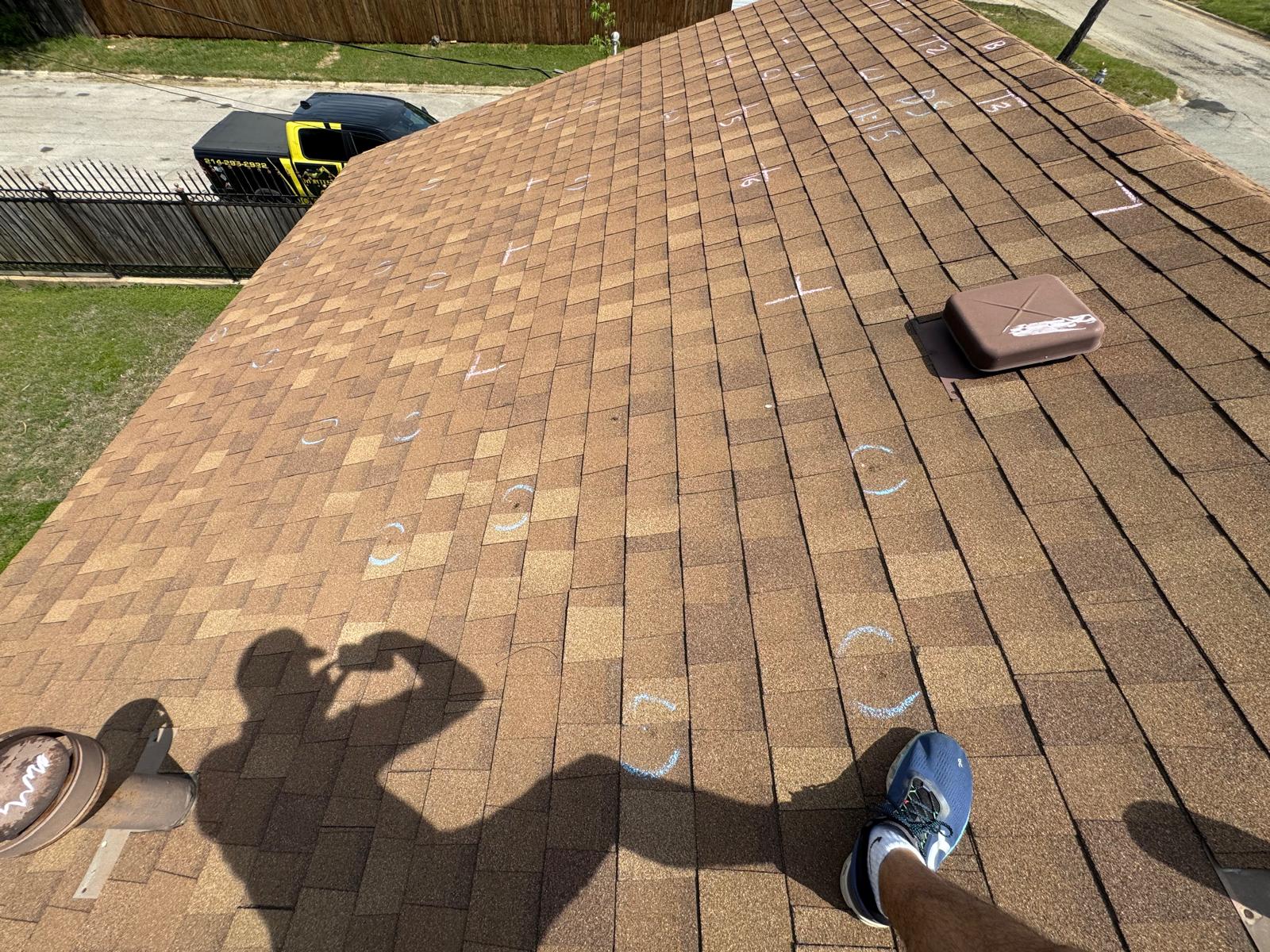
Hail doesn't always shatter shingles. Often, it creates a circular or irregular "bruise" where the impact flattens the granules and cracks the asphalt matting underneath. While the shingle might look intact from a distance, this weakened spot is prone to failure. Look for clusters of granules in your gutters, or on the ground below your roofline, especially if they appear to be from a specific area. Sometimes, you can see faint circular indentations on the shingles themselves.
Wind damage can be tricky too. High winds can cause shingles to lift, even if they don't blow completely off. This lifting can break the adhesive seal that bonds shingles together. Over time, this compromised seal can lead to gradual granule loss and eventually allow water to seep underneath. Even if the shingles appear to be lying flat after the wind dies down, the seal might be broken. A gentle lift of a shingle edge (if safe to do so) might reveal if the adhesive strip is still intact.
After a wind event, pay attention to your landscaping. If you notice fallen branches that seem to have landed on your roof, or if garden furniture has been blown against your house, it's a good indicator that winds were strong enough to potentially cause shingle damage.
Another subtle sign to watch for is premature aging of your shingles. If you notice that shingles in certain areas of your roof, particularly those exposed to the harshest sun and wind, seem to be fading, cracking, or curling more than others, it could be a sign that they've been subjected to repeated stress from storms, even if the damage wasn't catastrophic each time. This is especially true if your roof is nearing the end of its expected lifespan, typically 15-30 years for most asphalt shingles, depending on the quality.
The goal here is to catch these early signs before they lead to more significant issues. A roof that's showing these subtle signs of wear and tear might still be functional for now, but it's a prime candidate for future problems, especially if another storm rolls through. Proactive maintenance and timely repairs are key to maximizing your roof's lifespan.
When to Call the Pros: Recognizing Damage That Requires Expert Intervention
While this checklist is designed to help you identify potential issues, it's crucial to know when a DIY inspection needs to turn into a call for professional help. Some damage is simply beyond the scope of a homeowner's ability to safely or effectively assess and repair. As a general rule, if you see any of the following, it's time to contact a reputable roofing contractor in DFW.
Climbing onto a damaged or wet roof is dangerous. Falls can cause serious injury or be fatal. If you are not comfortable, trained, or equipped for roof inspections, leave it to the professionals. Your safety is paramount.
Major Shingle Damage: If you have more than a few missing shingles, or if large sections appear to be lifted, torn, or severely cracked, it's time to call in the experts. These widespread issues indicate significant wind or hail impact that needs professional assessment and repair or replacement. We're talking about damage that affects the integrity of your roof's coverage.
Compromised Flashing: Any damage to flashing around chimneys, vents, skylights, or in valleys is a critical concern. These are complex areas, and improper repair can lead to persistent leaks. If you see bent, loose, torn, or missing flashing, this needs immediate professional attention. A small issue here can lead to extensive water damage to your roof deck, attic, and interior.
| Issue | Homeowner Check | When to Call a Pro |
|---|---|---|
| Missing Shingles | Note a few missing shingles | Multiple missing shingles, large gaps, or shingles blown off entire sections |
| Shingle Granule Loss | See granules in gutters | Significant granule loss covering large areas, or shingles appearing "bald" |
| Cracked/Curled Shingles | Notice a few curled edges | Widespread cracking, cupping, or shingles lifting significantly across the roof |
| Flashing Damage | See minor dents | Bent, loose, torn, missing flashing, or gaps around penetrations |
| Attic Leaks | Notice a small damp spot | Visible daylight through roof deck, widespread water stains, or active dripping |
| Sagging Roofline | Notice minor unevenness | Obvious sagging that indicates structural issues or severe water damage |
Structural Concerns: If you notice any sagging in your roofline, it's a serious red flag. This could indicate that the roof deck has been compromised by water damage, or that the underlying structural supports are failing. This type of issue requires immediate professional assessment and repair to prevent a potential collapse. This is not something a homeowner can safely address.
Suspected Hail Damage: Even if you don't see shattered shingles, hail can cause significant internal damage. If you've had hail in your area, it's wise to have a professional inspect your roof. They can identify bruised shingles and other subtle impact marks that you might miss, which can lead to premature roof failure. Many insurance companies require a professional inspection for hail damage claims.
How to Get This Done
If you've identified any of the issues above, or if you're simply unsure about the extent of the damage, it's time to call in the experts. Montesco Roofing's experienced team is adept at identifying all types of storm damage, from the most obvious to the most subtle. We'll provide a detailed assessment and discuss your repair or replacement options, working with you to navigate the process, especially if insurance claims are involved.
Montesco Roofing's Approach: Proactive Inspection for Peace of Mind
Here at Montesco Roofing, we believe that protecting your home starts with knowledge and proactive care. We've been a trusted roofing contractor in DFW for over 13 years, and our commitment goes beyond just fixing leaks. We aim to educate homeowners like you on how to best care for your roof, especially after the unpredictable spring storms that hit North Texas.
"We don't just install roofs; we build relationships based on trust and quality workmanship. For us, it's about ensuring that your home, your biggest investment, is protected for years to come."— A Montesco Roofing Team Member
Our approach to post-storm inspections is thorough and transparent. When you call us, you're not just getting a sales pitch; you're getting an expert opinion from someone who understands the nuances of roofing systems and the specific challenges posed by the DFW climate. We'll conduct a detailed inspection, walking you through every step of our process. We'll document any findings with clear photos and explanations, so you understand exactly what's happening with your roof.
Why Choose Montesco for Your Post-Storm Inspection?
- Local Expertise: 13+ years serving Dallas-Fort Worth means we know our weather and our materials.
- Comprehensive Assessment: We go beyond the obvious, looking for subtle signs of damage.
- No-Pressure Consultations: We provide honest assessments and clear recommendations.
- Insurance Claim Assistance: We can help document damage for your insurance company, making the process smoother.
- Quality Materials & Workmanship: We stand behind our work with strong warranties.
We understand that dealing with storm damage can be stressful. That's why we strive to make the inspection and repair process as smooth as possible. Whether it's a minor repair or a full roof replacement, our team is dedicated to providing high-quality service and lasting solutions. We use only top-tier materials from trusted manufacturers like GAF, Owens Corning, and CertainTeed, ensuring your new roof will stand up to future Texas storms.
Need help assessing storm damage on your DFW roof? Our team has protected hundreds of homes in Dallas, Fort Worth, Plano, Frisco, and surrounding areas. Don't let storm damage compromise your home's integrity. Schedule your free inspection today.
Get Your Free Roof Inspection →Frequently Asked Questions About Post-Storm Roof Inspections in DFW
Frequently Asked Questions About Post-Storm Roof Inspections in DFW
How soon after a storm should I inspect my roof?
What's the difference between wind damage and hail damage?
Can I file an insurance claim for minor roof damage?
How much does a roof inspection cost?
What if I can't safely get on my roof?
How long do DFW roofs typically last?
What are the risks of not repairing storm damage promptly?
Montesco Roofing Team
DFW's trusted roofing contractor with 13+ years of experience. Specializing in roof replacements, storm damage repair, and insurance claims across Dallas-Fort Worth.
Get in touch →